

In 2024, Ametra was entrusted with leading an introductory module on FPGA at ECE Paris, as part of the established partnership between the company and the engineering school. This seven-day program, designed for a cohort of 4th-year engineering students, was conceived and delivered by an FPGA expert from the group. A Tailor-Made Collaboration This training cycle is part of a shared desire to align engineering curricula with the concrete demands of the industrial world. Our expert thus developed a program combining theoretical contributions, best practices from the field, and concrete cases drawn from his experience in client environments. The objective: to lay solid foundations for an FPGA culture and allow students to discover, through real professional situations, the richness of this technical specialty. At this stage of their academic journey, students are still approaching this field exploratorily: it is an opportune moment to spark interest and foster vocations. Practice-Oriented Teaching The module’s program included: circuit architecture, structured VHDL coding, design simulation, and on-board integration. Practical work was carried out on benches equipped with programmable boards, in a logic of direct application of the concepts covered. The content was designed to reflect the real challenges encountered in the industry: reliability, performance, client requirements, and documentary rigor. The pedagogical approach, resolutely operational, was praised by both students and the ECE teaching staff. Although this specialty holds only a targeted place in their training, several students showed particular dedication, suggesting a real potential for further development in the medium term. Transmitting and Valuing Rare Expertise Beyond the teaching itself, this initiative embodies Ametra’s commitment to promoting its professions and supporting young talents in their skill development. The field of FPGA, often misunderstood or perceived as complex, remains a strategic skill today in sectors such as aeronautics, defense, space, and automotive. By sharing its field expertise, Ametra aims to contribute to greater visibility of this know-how, while forging a lasting link with engineering education. This action is fully in line with the group’s school partnership policy and complements existing initiatives, such as hosting apprentices. An ECE 3rd-year student is currently integrated into Ametra’s teams. By partnering with ECE, Ametra confirms its commitment to actively participate in skill development and the transmission of expertise. This first collaboration is part of a long-term dynamic: to contribute, alongside partner schools, to the training of tomorrow’s engineers. (c) ECE – Ametra Group
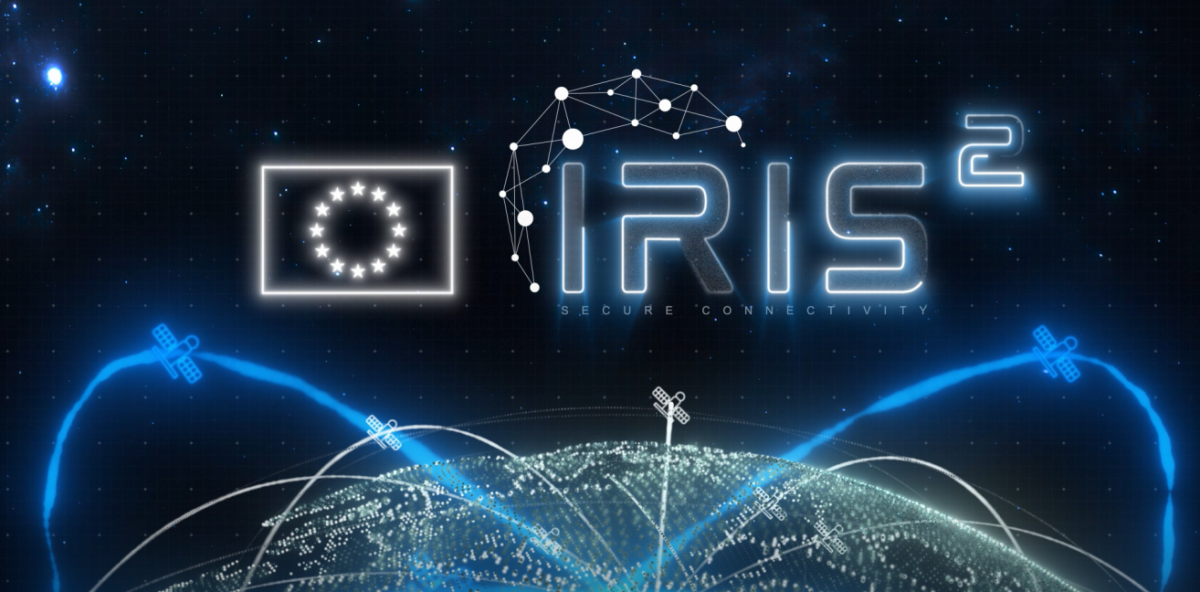
IRIS²: Europe strengthens its space sovereignty with a secure constellation
In the wake of Elon Musk’s Starlink projects or Amazon’s Kuiper, the European Union launched its own satellite constellation programme in 2022: IRIS² (Infrastructure for Resilience, Interconnectivity and Security by Satellite). This strategic space project, with an estimated budget of €6 billion, is part of a drive for technological sovereignty, geopolitical resilience and secure government communications. A constellation designed for critical uses IRIS² aims to deploy a constellation of small satellites in low Earth orbit (LEO) by 2027, with global coverage. However, unlike its US counterparts, the programme is not primarily designed to connect the general public. Its core target? Public institutions, armed forces, NGOs and poorly connected areas, with critical services for secure communications. The system is expected to rely on a hybrid architecture combining LEO and GEO satellites, with end-to-end quantum encryption, ensuring very high-level security. Government communications, emergency services and defence applications should therefore, in principle, be the main beneficiaries of this sovereign infrastructure. A strategic industrial consortium The project is led by the IRIS² Secure Consortium, which brings together 22 European companies and is headed by the following leaders: This consortium was formed around the initial industrial response known as SpaceRise, which won the tender launched by the European Commission. This alliance reflects the desire to pool European expertise in space (satellite manufacturing, ground segment, cryptography, cybersecurity, electric propulsion, etc.) to create an autonomous technological ecosystem in the face of US and Chinese giants. Airbus, the consortium leader, is also strengthening its industrial leadership in LEO satellites with related projects such as producing satellites for the OneWeb constellation, operated by Eutelsat. This contract, announced at the end of 2024, demonstrates its ability to deliver quickly at scale, a key asset for IRIS². A programme serving strategic autonomy IRIS² is the third European space pillar, alongside Galileo (navigation) and Copernicus (Earth observation). It addresses several major challenges: This project also aligns with the strategic priorities set by the European Commission and supported by leading Member States such as France and Germany. It is governed by a European regulation adopted in March 2023. And where does Ametra fit into all this? To date, the Ametra Group is not directly involved in the development of the IRIS² programme. Nevertheless, our expertise in developing complex systems, industrial resources and integration solutions for space projects (Ariane 6, etc.) enables us to maintain active monitoring of this type of initiative. IRIS² opens up new prospects for the entire European industrial sector. In the next phases, it will involve mobilising skills in mechatronics, embedded structures, simulation, cybersecurity and complex testing, among others. This is an area in which Ametra is fully legitimate to contribute, as a player already engaged in major space programmes. To find out more about Ametra’s expertise in aerospace, embedded systems and industrial resources, visit us on our website . Do not forget to follow us on LinkedIn! © European Commission – illustrative image