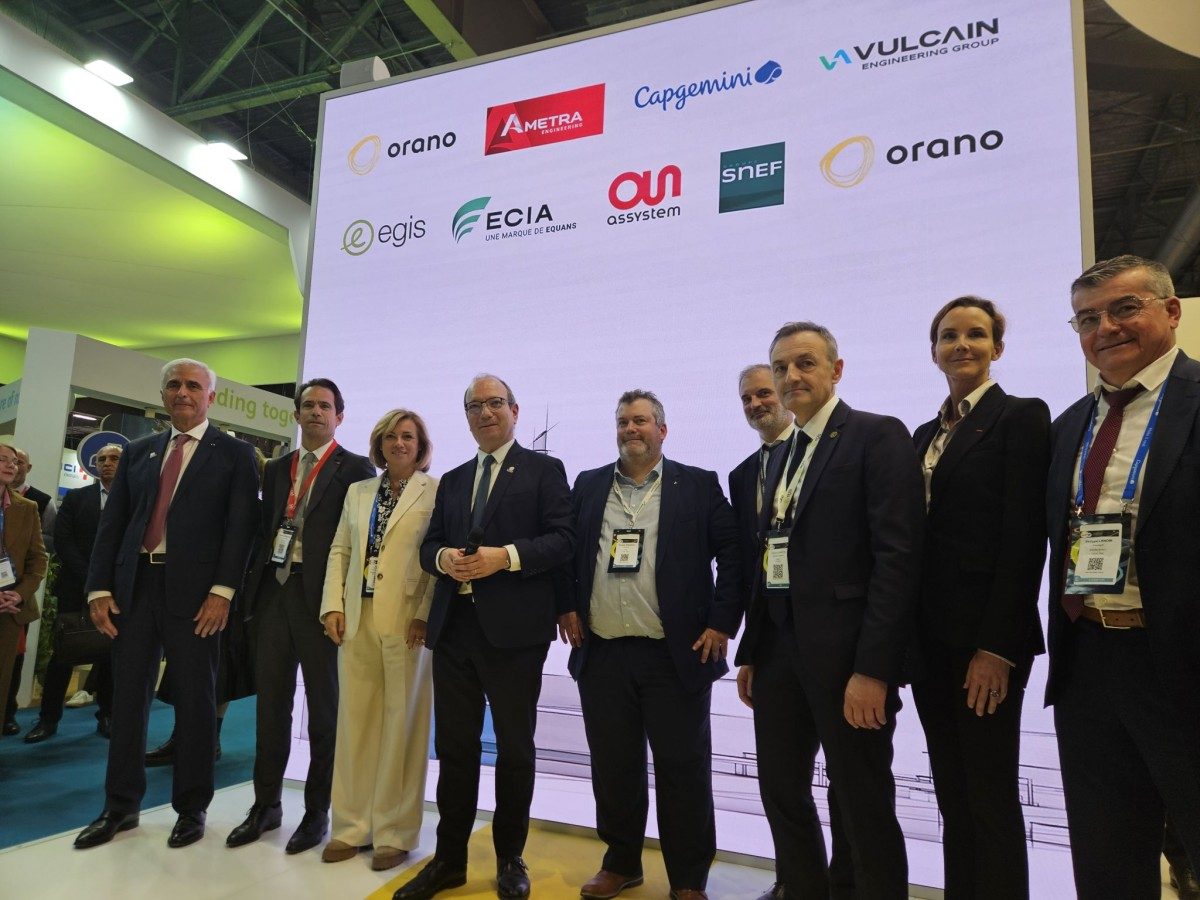
Launched in 2024, Orano’s Aval du Futur program aims to design the next generation of nuclear fuel treatment and recycling facilities. At the World Nuclear Exhibition 2025, Orano signed three major engineering partnerships to support this ambition. In this context, Ametra, a long-standing partner of the group, provides its dual expertise in mechanical design and numerical simulation. A Long-Standing Collaboration Renewed Present alongside Orano since the Cogema and Areva eras, the Ametra Group has supported the fuel cycle sector for nearly forty years on major projects such as the MELOX plant and GoMOX, the modernization program for MOX fuel production lines. This continuity is built on recognized expertise in mechanical design and calculation: gloveboxes, metal frameworks, and process equipment specific to the fuel cycle. “Our long-standing expertise in mechanical design and calculation with Orano made the difference,” emphasizes Thomas Gilibert, Agency Director at Ametra. “We know their processes and requirements and standards, which makes our collaboration effective and demonstrates our relevance in contributing to the Aval du Futur programs.” An Industrial Program Based on Continuity, Modernization, and Sustainability The Aval du Futur program is part of the modernization and sustainability of the fuel cycle sector. It aims to replicate and improve proven models, particularly those of the MELOX plant, while integrating: Certain designs will involve assemblies comparable to those of the MELOX plant, deployed at the La Hague site. In parallel, ORANO also seeks to ensure the long-term resilience of existing facilities. Ametra will thus contribute both to the design of future units and to the operational maintenance of current infrastructure, through its recognized competencies in: “We have often worked on operating facilities for Orano: maintenance, repairs, adaptations. We will reinvest all this experience in Aval du Futur ,” specifies Thomas Gilibert. Teams Mobilized Across the Territory While the future facilities of the program will be located at La Hague, the engineering workload will be distributed across several sites in France. Orano has chosen to distribute the studies across all its locations, and Ametra supports this approach through its offices in Cherbourg, Clamart, Aix-en-Provence, Bagnols-sur-Cèze, and Bordeaux. Each site will have a local technical representative ensuring daily liaison with Orano teams. A Sustained Industrial Schedule and Two Key Milestones by 2026 The partnership is already underway, with an initial operational deployment in Cherbourg, the heart of the program’s launch. Two major milestones are planned at the end of 2026: This program includes the completion of a comprehensive audit of operating units to assess their condition, identify improvements to be implemented to ensure their operational maintenance (MCO) during the transition period to future infrastructure. These two complementary components (Aval du Futur and Sustainability-Resilience) reflect Orano’s commitment to combining innovation and industrial continuity. The ramp-up, initiated in 2025, will intensify in 2026, with between 50 and 80 employees mobilized ultimately within Ametra. A Contribution at the Heart of Energy Sovereignty By participating in the Aval du Futur program, Ametra confirms its role as a key player in the French nuclear sector. This collaboration is part of a logic of continuity, innovation, and proximity, faithful to the group’s DNA: rigor, knowledge transfer, and technical excellence in service of major energy and industrial sovereignty projects. Would you like to learn more about Ametra Group’s expertise and references? Visit our official website. Also follow us on LinkedIn to stay updated on our latest news.
Supporting the nuclear revival: rigour, expertise, and proximity
“Reviving nuclear power is not about reinventing the wheel: it is about replicating what works, with safety as the foremost principle” An unprecedented context of industrial revival On February 10, 2022, in Belfort, President Emmanuel Macron announced the construction of six EPR2 reactors and the study of eight additional units. This speech, part of the national strategy for reindustrialization and energy sovereignty, marked the turning point for a sector that had been dormant for several decades. With the exception of the Flamanville 3 project, launched in 2007 and entering the final commissioning phase in 2024 after more than ten years of delays, France had not built a new reactor since the late 1990s. As a result, industrial and technical know-how has diminished, a direct consequence of decades of low activity and underinvestment in the sector. Parliamentary reports (Senate/OPECST, Court of Auditors) have confirmed this loss of skills linked to low activity and the decline in the number of specialized nuclear engineers being trained. The example of the Melox plant (Gard), operated by Orano and dedicated to manufacturing MOX fuel, has become emblematic: the company acknowledged the need to rebuild capabilities for certain critical operations. More broadly, the winter of 2022–2023 acted as a wake-up call: up to 32 of 56 reactors were shut down, revealing the vulnerability of an ageing fleet and the urgent need to revive the sector to ensure national energy autonomy. This revival goes beyond the construction of EPR2 units alone: it involves the entire value chain, from the fuel cycle to maintenance, including training and the ramp-up of subcontractors. Mastering what exists rather than innovating at any cost Today, industrial players share the same conviction: it is better to replicate perfectly than to try at all costs to reinvent. In a sector where safety is paramount, innovation only makes sense if it is controlled. The EPR2 project illustrates this well: it simplifies and improves the reliability of the original EPR design, whose complexity had generated considerable cost overruns and delays. At present, Ametra Group’s clients expect our experts to be able to replicate what works, without taking unnecessary risks. The challenge is rigour: zero surprises, zero drift. Sustainability-Resilience, Aval du futur…: the major nuclear programmes currently underway The French revival is now structured around several major programmes: These projects follow the same logic: preparing for the future without weakening the present, ensuring continuity of operations for the fleet and plants while launching tomorrow’s infrastructure. Ametra, a long-standing partner of the French nuclear industry Ametra is one of the few engineering players to have never left the nuclear sector.Even during periods of slowdown in the industry, the company continued to invest in it, which helped maintain a foundation of skills and safety processes—now a major asset. Ametra’s engineering office has, in fact, devoted 50 to 60% of its activity to nuclear for decades, with in-depth mastery of the sector’s specific codes and standards. This continuity has enabled the company to preserve a genuine nuclear culture, a decisive advantage at a time when the industry is recruiting on a massive scale. Ametra also complies with the requirements of ISO 19443, the international quality standard dedicated to the nuclear sector, already adopted by several major industry players. Geographical proximity and on-site support Supporting industrial players also means being present as close as possible to key sites.Ametra has therefore strengthened its presence in the main nuclear activity hubs: Supporting also means being “where it happens”. Our teams are on the ground, in direct contact with industrial players, to ensure responsiveness and technical consistency. A necessity: passing on and capitalizing on nuclear know-how The nuclear revival cannot succeed without intergenerational knowledge transfer. At Ametra, this approach is based on a structured transfer of skills: the most experienced engineers (sometimes with more than twenty years in nuclear) mentor new recruits to pass on safety reflexes and documentary rigour. This model is all the more strategic as the sector is now facing a shortage of qualified talent. According to GIFEN and the Ministry of Labour, the sector will need to recruit 10,000 to 15,000 new professionals per year over the coming decade—almost double the number of young graduates leaving schools each year. Ametra contributes to this collective effort by supporting profiles from other industrial sectors: special-purpose machinery, pressure equipment, agricultural machinery, heavy industry… These engineers, already familiar with robustness and traceability requirements, then acquire the “nuclear layer” through internal training. Industrial rigour in service of nuclear power In nuclear, safety is not just a protocol: it is a shared culture at every level of the project. As an Ametra manager points out, “even the person who tightens a screw must understand why they are doing it and how their action contributes to overall safety”.. Within the Group, this requirement is expressed through three complementary pillars: This approach anchors safety over the long term: it is not based solely on regulatory compliance, but on a collective mindset shared by all Ametra teams and their partners. Ametra, a key partner in the French nuclear revival By participating in major programmes such as EPR2, Aval du Futur, Sustainability-Resilience, and the SNLE 3G or S3G, Ametra is actively contributing to the rebuilding of the French nuclear sector. This contribution is built on clear fundamentals: rigour, expertise, proximity, and continuity. True to its industrial culture, Ametra stands out as a reliable, stable partner capable of going the distance—essential qualities for the sector’s major prime contractors. Would you like to learn more about Ametra Group’s expertise and references? Visit our official website. You can also find us on LinkedIn to stay up to date with our news.
WNE 2025 as if you were there: a concrete revival, still taking shape
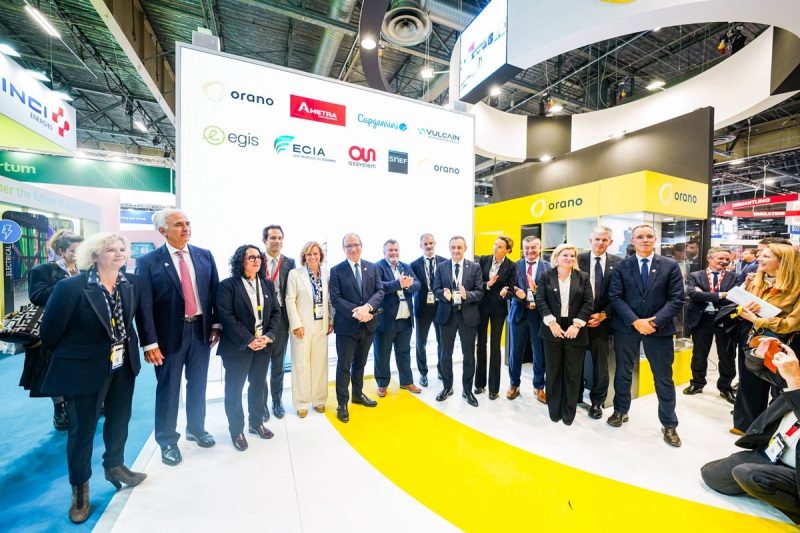
From November 4 to 6, 2025, the 6th edition of the World Nuclear Exhibition brought together at the Paris Nord Villepinte exhibition center more than 1,000 exhibitors from 80 countries and nearly 25,000 professional visitors: a historic record for the world’s largest civil nuclear trade show. An edition focused on practical outcomes: fewer concepts, more feedback and solutions ready to be deployed. An industry ramping up This edition marked a turning point: research and development gave way to a focus on industrialization, securing supply chains and energy sovereignty. The industry has entered a phase of strengthened production momentum, even if the full ramp-up is still underway. In the aisles, the tone was quickly set: industrialize, produce, and make reliable.The major players (EDF, Framatome, Orano, CEA and Onet Technologies) showed rare unity around the theme Nuclear Today and Tomorrow. The opening conferences also reiterated the priorities: standardize processes, secure supply chains, and guarantee energy sovereignty. For Ametra Group, involved in several strategic programs, this momentum confirms the key role of integrated engineering in the industrial success of the French nuclear sector. Pragmatic, integrated innovation Innovation, far from spectacular demonstrations, was expressed through practical applications that can be implemented immediately. Framatome presented demonstrations of artificial intelligence applied to maintenance and quality control. CETIM, Onet Technologies and Veolia Nuclear Solutions, for their part, highlighted robotics, additive manufacturing and the digitalization of maintenance—tools that are now central to improving the reliability of facilities. This pragmatic approach echoes the practices of Ametra Engineering and Ametra Simulation, where performance and reliability guide every project. Industrial sovereignty and reshoring Strengthening the supply chain was at the heart of discussions. Orano announced several engineering partnerships as part of its program Aval du Futur (Ametra is one of these partners), dedicated to modernizing the fuel cycle, as well as an agreement with Sintermat to develop new advanced materials for nuclear packaging. These initiatives reflect a shared ambition: bring production closer to needs and reshore strategic know-how. Ametra Group is fully aligned with this momentum through the design and integration of handling, testing and assembly equipment at the heart of programs such as Aval du Futur. Beyond Electricity: diversification in the making A major new feature of this edition, the Beyond Electricity Expo (BEE) showcased more than twenty projects exploring non-electric uses of nuclear energy: low-carbon hydrogen, industrial heat, desalination, radiomedicine, and even space propulsion. This diversification confirms the cross-cutting role of nuclear energy as a lever for the energy transition, even if these applications remain, for now, at pilot or experimental stages. SMRs and major technical projects Small modular reactors (SMRs), EPR2 and major life-extension programs took center stage in technical discussions. The digitalization of facilities, through digital twins and predictive maintenance, is gradually becoming the norm—evidence of a more mature sector and a ramp-up that is now clearly tangible. Skills, training and attractiveness The sector anticipates a massive need for talent: by 2035, nearly 100,000 hires are expected according to GIFEN. The Job & Training area drew strong attendance: schools, training organizations and industrial players mobilized to restore visibility and attractiveness to nuclear careers. A priority that aligns with Ametra Group’s commitment to passing on know-how and building the skills needed to support the industrial revival. An open, structured sector in an international framework The WNE 2025 confirmed that the nuclear revival extends well beyond France. Discussions with South Korea, the United Arab Emirates and the Czech Republic illustrated the growing strength of industrial and technological cooperation. The IAEA /IAEA and several European consortia reaffirmed their role in international standardization and safety—essential conditions for the success of export ambitions. At the same time, governance, regulatory simplification and sustainable financing (European taxonomy and green bonds) are evolving to support this new industrial pace. Conclusion: a barometer more than a showcase The WNE 2025 stands out as a reliable barometer of a sector undergoing rapid structuring, rather than a showcase of completed successes. The French and European nuclear sector has regained coherence, visibility and confidence, but challenges remain: industrial scale-up, skills management, supply-chain security and diversification of uses. In this context, Ametra Group continues its commitment to making nuclear a safe, sustainable and well-controlled sector, backed by several decades of expertise serving industry. To learn more about the activities, expertise and news of Ametra Group, visit ametragroup.com. You can also follow us on LinkedIn to discover projects, feedback and industry news. (c) main image: Orano