
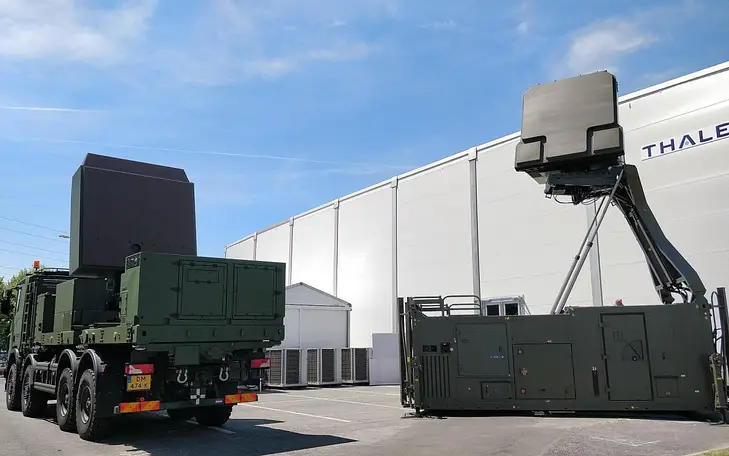
In a geopolitical context that has abruptly underscored the importance of sovereignty, the defence industry is undergoing a historic transformation. For major prime contractors, the challenge is no longer only to design the world’s highest-performing systems, but to produce them quickly and at scale. A deep dive into this industrial ramp-up, where engineering plays a critical role. Just a few years ago, producing cutting-edge radar systems was almost akin to industrial craftsmanship: limited series, long cycles, and a pace suited to peacetime. Today, the paradigm has shifted. Driven by European nations’ rearmament needs and the requirements of the Military Programming Law, manufacturers must scale up. This is the challenge currently being taken on by Thales (GBU Land & Air Systems). At its sites in Île-de-France and the Loiret—particularly in Limours—the objective is clear: increase production rates on strategic ranges such as mobile radars (GM 200, GM 400) and embedded systems. The technical challenge hidden behind volume While attention often focuses on the number of systems to be delivered, the engineering reality is more complex. Moving from near-craft production to a sustained serial rate creates a technical shockwave across the entire value chain. This industrial scale-up is not limited to expanding assembly lines. It generates a massive intensification of technical flows: This is where “ramp-up” becomes a true design office challenge. From “mass staffing” to targeted expertise: the AMETRA Group’s response Faced with this surge in workload, the market’s classic response is often to deploy battalions of consultants (“mass staffing”). However, on sovereign systems where regulatory rigour is non-negotiable, volume is not enough. What is needed is expertise: domain/sector and security. It is in this demanding space that Ametra Group works alongside Thales. A long-standing partner recognised for its “design office” culture and its command of the defence sector, the AMETRA Group has deployed a dedicated Service Centre. This delivery model, designed to mobilise several dozen employees (mechanical and electrical engineers and technicians) at cruising speed, stands out for its qualitative approach: Engineering in the service of sovereignty Beyond industrial performance, this project carries a particular dimension for the teams involved. Working on the radars that equip first-rank frigates or the Rafale’s air-to-ground defence systems is not a trivial assignment. It is this pride in contributing to technologically advanced projects that are useful to the nation that cements the partnership. Where industry stakes its credibility on its ability to produce and deliver, the AMETRA Group provides this essential building block: multi-disciplinary technical assurance combined with a commitment to results, enabling a strategic order to be turned into an operational reality. To go further
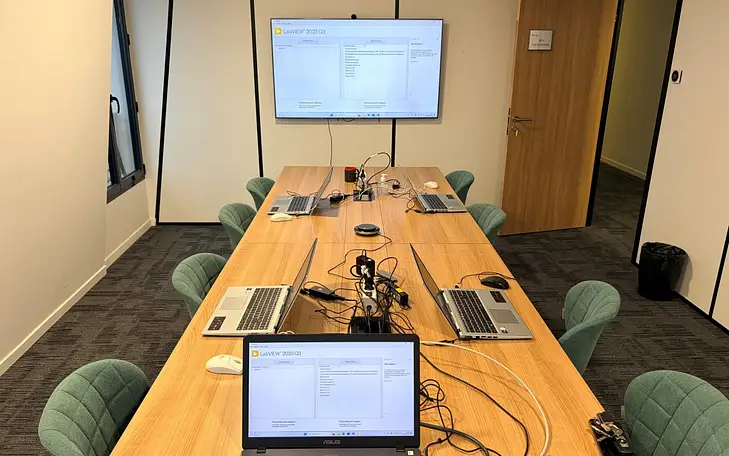
Why choose a training path rather than a one-off training session?
In the urgency of industrial projects, the temptation is often strong: “we need a 2-day Python training for this team, as quickly as possible“. On paper, the “one-shot” response seems agile and economical. However, at a time when technical skills are evolving at high speed, this approach is increasingly showing its limits. What if true profitability lay in a training path logic? For HR departments and technical managers, the equation is well-known: faced with an operational emergency, the reflex is often to deal with the most pressing matter. “He’s missing LabVIEW Level 1″, “We need a TestSTAND upgrade“. While this response plugs a short-term gap, neurosciences and field reality agree on one point: for an adult, learning is a process, not an isolated event. At Styrel, the 2026 catalogue approach marks a break with this “à la carte” consumption in favor of structured skill paths. Here is why this strategy is a winner for both the company and the learner. From “knowledge” to “operational competence” A 2-day training course allows one to understand a concept. It rarely allows for lasting mastery. The loss rate of a standalone training session is very high. What matters is not what the trainee knows on Friday evening, but what they still have at their fingertips three months later. This is the whole difference between an isolated workshop and a path. A training architecture allows for the respect of learning cycles: Expertise from the field, not from theory The great strength of these paths lies in their DNA. Unlike generalist organizations, Styrel relies on trainers who are, above all, active technical experts. Our trainers all come from the design office. They have, so to speak, their “hands in the grease” on a daily basis. This direct connection with industrial reality ensures that our paths (whether on LabVIEW, Linux, or embedded electronics) are not limited to software features, but address real use cases encountered by learners (real-time constraints, ATEX environments, etc.). Securing the investment (and the budget) There is a common misconception that a complete path would be too expensive. The economic reality is often the opposite. “One-shot” training generates massive hidden costs: time lost searching for solutions, design errors due to lack of depth, or the need to “re-train” six months later because the prerequisites were not met. Opting for a path means rationalizing the investment: The winning mix: face-to-face, remote, and AFEST To be digestible and compatible with project workloads, 2026 training must be multimodal. Styrel paths mix various approaches: In short, moving from a “workshop” logic to a “path” logic means stopping the consumption of training to start building performance. Performance guaranteed by the industrial DNA of Styrel, a subsidiary of the Ametra group. Both an expert in industrial computing and a Qualiopi-certified training organization, transmitting proven know-how, not just theory. To go further: