“Reviving nuclear power is not reinventing the wheel: it’s reproducing what works, with safety as the primary principle.” An Unprecedented Industrial Revival Context On February 10, 2022, in Belfort, President Emmanuel Macron announced the construction of six EPR2 reactors and the study of eight additional ones. This speech, part of the national strategy for reindustrialization and energy sovereignty, marked a turning point for a sector that had been dormant for several decades. With the exception of the Flamanville 3 project, launched in 2007 and entering its final commissioning phase in 2024 after more than ten years of delay, France had not built a new reactor since the late 1990s. As a result, industrial and technical expertise has diminished, a direct consequence of decades of underactivity and disinvestment in the sector. Parliamentary reports (Senate/OPECST, Cour des comptes) confirmed this loss of skills linked to underactivity and the decline in the number of specialized engineers trained in the nuclear field. The example of the Melox plant (Gard), operated by Orano and dedicated to the manufacture of MOX fuel, has become symbolic: the company recognized the need to rebuild skills for certain critical operations. More broadly, the winter of 2022–2023 acted as an electroshock: up to 32 out of 56 reactors were shut down, revealing the vulnerability of an aging fleet and the urgent need to revive the sector to ensure national energy autonomy. This revival goes beyond the mere construction of EPR2s: it involves the entire chain, from the fuel cycle to maintenance, including training and the ramping up of subcontractors. Mastering the Existing Rather Than Innovating at All Costs Manufacturers today share a common conviction: it is better to reproduce perfectly than to seek to reinvent at all costs. In a sector where safety is a priority, innovation only makes sense if it is controlled. The EPR2 project perfectly illustrates this idea: it simplifies and enhances the reliability of the first EPR’s design, whose complexity had generated considerable cost overruns and delays. Currently, Ametra Group’s clients expect our experts to be able to reproduce what works, without unnecessary risk-taking. The challenge is rigor: zero surprises, zero deviations. Sustainability-Resilience, Future Back-End…: Major Nuclear Programs Underway The French revival is currently structured around several key programs: These projects share the same logic: preparing for the future without weakening the present, by ensuring the operational continuity of the existing fleet and plants while launching tomorrow’s infrastructure. Ametra, a Historical Partner in French Nuclear Power Ametra is one of the few engineering players to have never left the nuclear sector. Even during periods of slowdown in the industry, the company continued to invest in it, which allowed it to maintain a foundation of skills and safety processes, now a major asset. Ametra’s calculation office has indeed dedicated 50 to 60% of its activity to nuclear power for decades, with in-depth mastery of the sector’s specific codes and standards. This continuity has allowed the company to preserve a true nuclear culture, a decisive asset at a time when the sector is recruiting massively. Ametra is also compliant with the requirements of ISO 19443, the international quality standard dedicated to nuclear power, already adopted by several major players in the sector. Geographic Proximity and On-Site Support Supporting manufacturers also means being present as close as possible to key sites.Ametra has thus strengthened its presence in major nuclear activity basins: Support also means being “where it happens.” Our teams are on the ground, in direct contact with manufacturers, to ensure responsiveness and technical consistency. A Necessity: Transmitting and Capitalizing on Nuclear Expertise The nuclear revival cannot succeed without intergenerational transmission. At Ametra, this logic is based on structured skills transfer: the most experienced engineers (some with over twenty years in nuclear) mentor new recruits to pass on safety reflexes and documentary rigor. This model is all the more strategic as the sector currently faces a shortage of qualified talent. According to the GIFEN and the Ministry of Labor, the sector will need to recruit 10,000 to 15,000 new professionals per year over the coming decade, almost double the current number of graduates. Ametra contributes to this collective effort by supporting profiles from other industrial sectors: special machines, pressure equipment, agricultural machinery, heavy industries… These engineers, already familiar with robustness and traceability requirements, then acquire the “nuclear layer” through internal training. Industrial Rigor Serving Nuclear Power In nuclear power, safety is not just a protocol: it’s a shared culture at all levels of the project. As an Ametra manager reminds us, “even someone installing a screw must understand why they are installing it and how their action contributes to overall safety.” Within the group, this requirement is expressed through three complementary pillars: This approach anchors safety in the long term: it relies not only on regulatory compliance but on a collective mindset, shared by all Ametra teams and its partners. Ametra, a Key Partner in the French Nuclear Revival By participating in major programs such as EPR2, Future Back-End, Sustainability-Resilience, and the SNLE 3G / S3G, Ametra actively contributes to the reconstruction of the French nuclear sector. This contribution is based on clear fundamentals: rigor, expertise, proximity, and continuity. True to its industrial culture, Ametra stands out as a reliable, stable partner capable of going the distance—essential qualities for major contractors in the sector. Would you like to learn more about Ametra Group’s expertise and references? Visit our official website. Find us also on LinkedIn to stay updated on our news.
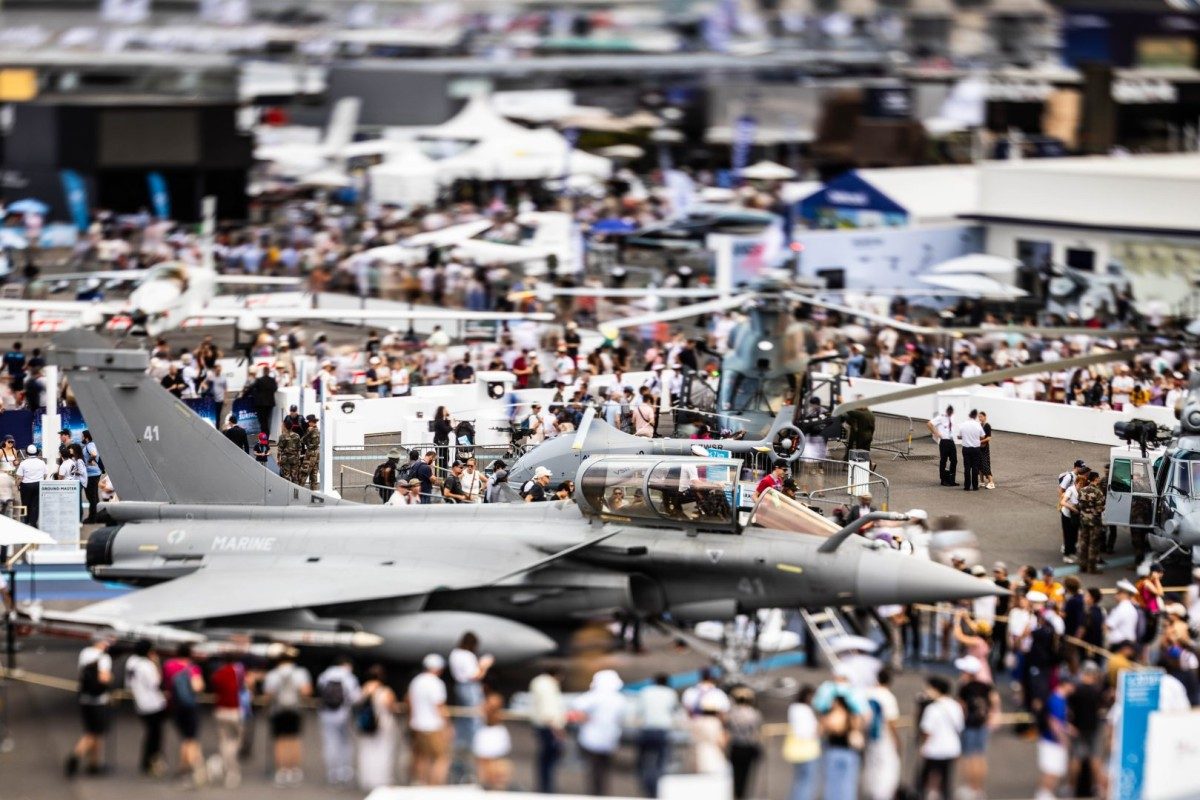
Le Bourget 2025 as if you were there
Once again this year, the International Paris Air Show (SIAE) at Le Bourget delivered on its promises. From June 16 to 22, 2025, the Parisian sky transformed into a global aerospace showcase, bringing together innovations, spectacular demonstrations, and strategic announcements. On the tarmac, in the halls, and during conferences, one observation became clear: the sector is entering a new era, shaped by the climate emergency, geopolitical tensions, and the rise of digital technology. For Ametra Group, this new edition was a prime opportunity to gauge the sector’s pulse and confirm our role as a key player in its transformation. This historic edition highlighted an unprecedented commitment to decarbonization, accelerated digitalization, and renewed ambition for Defense, space, and European technological sovereignty. Major Structuring Trends of the 2025 Edition Sustainable Aviation: From Promise to Reality Far from being an abstract concept, decarbonization has entered its industrialization phase. The challenge is no longer just to innovate, but to deploy on a large scale. Digitalization, AI, and Cybersecurity: The Performance Triptych Digital transformation is now integrated across the entire value chain. New Materials and Additive Manufacturing: The Silent Revolution The quest for lightness and performance relies on innovative materials. Thermoplastic composites, lighter and recyclable, are gaining ground over thermosets. Additive manufacturing is no longer a gadget: it is used for critical parts such as fuel injectors or structural elements, reducing mass and the number of parts to assemble. Defense and Sovereignty: A Strong Comeback The geopolitical context has brought defense issues to the forefront. The program SCAF (Future Combat Air System) was a centerpiece of Le Bourget, with detailed presentations of the collaboration between Dassault Aviation, Airbus, and their partners. This program is part of an integrated European defense strategy, in line with the ambitions of the European Defence Fund and Franco-German bilateral cooperation. Drones, from MALE (Medium Altitude, Long Endurance) to connected swarms, as well as space command and control (C2) solutions, affirmed their indispensable role in future operations. The 2025 edition also confirmed the vitality of French defense exports, with new prospects around the Rafale and strengthened industrial cooperation, particularly in India and Southeast Asia. The 2025 Paris Air Show was also marked by the signing of a public support agreement for VORTEX, the space glider demonstrator developed by Dassault Aviation. This ambitious project, supported by the French state, aims to explore suborbital flight and controlled atmospheric re-entry technologies, with a focus on reusability. With the goal of placing small payloads into low Earth orbit, VORTEX stands at the crossroads of aeronautics and space. It symbolizes France’s desire to gain technological sovereignty in segments currently dominated by major American New Space players, and could foreshadow future reusable and agile European space transport systems. Furthermore, the show was also an opportunity to reiterate European space ambitions through structuring programs such as IRIS² (Infrastructure for Resilience, Interconnectivity and Security by Satellite), Galileo (navigation) and Copernicus (Earth observation). These projects embody a growing desire for technological sovereignty and secure communications in low Earth orbit. This edition also highlighted the dynamic of European collaborative research, with demonstrators funded under the Clean Aviation program or the European Defence Fund. The Rise of eVTOLs and Urban Air Mobility The “flying taxi” sector has matured. Beyond flight demonstrators, discussions focused on the major challenges of certification by EASA and the FAA, and secure integration into an already dense airspace. Players like Archer and EHang unveiled prototypes ready for service, with initial AI integrations to assist pilots. The industrialization of production remains a major challenge, where expertise in process engineering is paramount. The show also highlighted a thriving ecosystem of technology startups, from alternative propulsion systems to software simulation solutions. Exceptional Commercial Momentum The 2025 edition was an exceptional vintage in terms of contracts, a sign of airlines’ confidence and the need to renew fleets. People at the Heart of the Industry Le Bourget is not just about contracts; it’s also where the future of professions is shaped. The A400M Atlas, a European military transport aircraft developed by Airbus Defence and Space, once again particularly impressed during its flight demonstrations. Capable of tactical and strategic operations, in-flight refueling, and deployments on austere terrains, it embodies modern operational versatility. The show highlighted its recently improved capabilities in simultaneous heavy load drops, short runway landings, and autonomous navigation in degraded environments. A400M Cockpit © Oleg Belyakov A Moment of Shared Pride for Ametra Integration Teams On Saturday, about forty Ametra Integration employees, accompanied by their families, traveled to the show at the joint initiative of the Works Council and management. Departing by bus in the morning, they were able to discover the various stands and attend the flight demonstrations, particularly that of the Rafale: a significant moment for the teams, who contribute directly to this program of excellence. Ametra Integration indeed participates in the manufacture of five Rafale subsystems for five distinct clients: Dassault Aviation, Thales, Safran, MBDA, and Aresia. Seeing this aircraft, on which they work every day, in action was a great opportunity to measure the concrete impact of their expertise. This type of initiative is fully in line with the group’s desire to strengthen the link between projects carried out in the field, the values of knowledge transfer, and the recognition of work accomplished. In conclusion: A Committed Industry, Stimulating Challenges The 2025 Paris Air Show concludes with a clear vision: the aerospace industry has fully embraced the dual requirement of growth and environmental responsibility. Transformation is no longer an option, but an industrial reality in motion. As a recognized player in industrial subcontracting, Ametra naturally participated in the Le Bourget show and is involved throughout the life cycle of embedded and mechatronic systems, from the study phase to production. Building on our expertise, we are committed alongside our partners to meet the challenges of structural lightening, complex system integration, qualification of new processes, and ramp-up. See you in 2027! To learn more about our expertise and references, visit our official website now. We are also on LinkedIn.
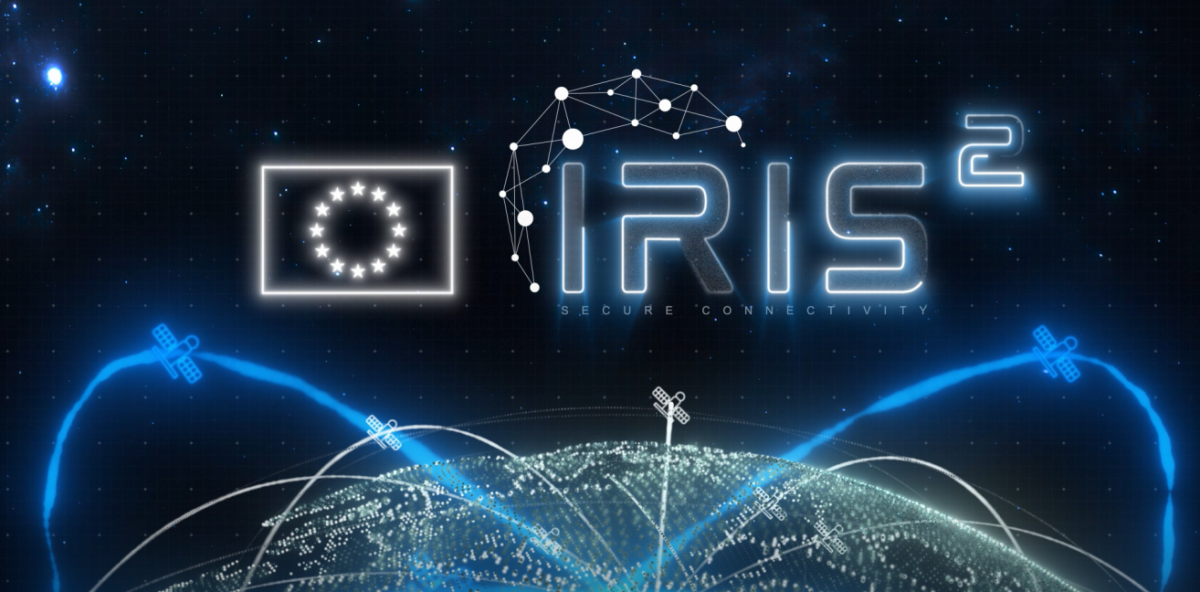
IRIS²: Europe strengthens its space sovereignty with a secure constellation
In the wake of Elon Musk’s Starlink projects or Amazon’s Kuiper, the European Union launched its own satellite constellation programme in 2022: IRIS² (Infrastructure for Resilience, Interconnectivity and Security by Satellite). This strategic space project, with an estimated budget of €6 billion, is part of a drive for technological sovereignty, geopolitical resilience and secure government communications. A constellation designed for critical uses IRIS² aims to deploy a constellation of small satellites in low Earth orbit (LEO) by 2027, with global coverage. However, unlike its US counterparts, the programme is not primarily designed to connect the general public. Its core target? Public institutions, armed forces, NGOs and poorly connected areas, with critical services for secure communications. The system is expected to rely on a hybrid architecture combining LEO and GEO satellites, with end-to-end quantum encryption, ensuring very high-level security. Government communications, emergency services and defence applications should therefore, in principle, be the main beneficiaries of this sovereign infrastructure. A strategic industrial consortium The project is led by the IRIS² Secure Consortium, which brings together 22 European companies and is headed by the following leaders: This consortium was formed around the initial industrial response known as SpaceRise, which won the tender launched by the European Commission. This alliance reflects the desire to pool European expertise in space (satellite manufacturing, ground segment, cryptography, cybersecurity, electric propulsion, etc.) to create an autonomous technological ecosystem in the face of US and Chinese giants. Airbus, the consortium leader, is also strengthening its industrial leadership in LEO satellites with related projects such as producing satellites for the OneWeb constellation, operated by Eutelsat. This contract, announced at the end of 2024, demonstrates its ability to deliver quickly at scale, a key asset for IRIS². A programme serving strategic autonomy IRIS² is the third European space pillar, alongside Galileo (navigation) and Copernicus (Earth observation). It addresses several major challenges: This project also aligns with the strategic priorities set by the European Commission and supported by leading Member States such as France and Germany. It is governed by a European regulation adopted in March 2023. And where does Ametra fit into all this? To date, the Ametra Group is not directly involved in the development of the IRIS² programme. Nevertheless, our expertise in developing complex systems, industrial resources and integration solutions for space projects (Ariane 6, etc.) enables us to maintain active monitoring of this type of initiative. IRIS² opens up new prospects for the entire European industrial sector. In the next phases, it will involve mobilising skills in mechatronics, embedded structures, simulation, cybersecurity and complex testing, among others. This is an area in which Ametra is fully legitimate to contribute, as a player already engaged in major space programmes. To find out more about Ametra’s expertise in aerospace, embedded systems and industrial resources, visit us on our website . Do not forget to follow us on LinkedIn! © European Commission – illustrative image