In the wake of Elon Musk’s Starlink projects or Amazon’s Kuiper, the European Union launched its own satellite constellation programme in 2022: IRIS² (Infrastructure for Resilience, Interconnectivity and Security by Satellite).
This strategic space project, with an estimated budget of €6 billion, is part of a drive for technological sovereignty, geopolitical resilience and secure government communications.
A constellation designed for critical uses
IRIS² aims to deploy a constellation of small satellites in low Earth orbit (LEO) by 2027, with global coverage.
However, unlike its US counterparts, the programme is not primarily designed to connect the general public.
Its core target? Public institutions, armed forces, NGOs and poorly connected areas, with critical services for secure communications.
The system is expected to rely on a hybrid architecture combining LEO and GEO satellites, with end-to-end quantum encryption, ensuring very high-level security.
Government communications, emergency services and defence applications should therefore, in principle, be the main beneficiaries of this sovereign infrastructure.
A strategic industrial consortium
The project is led by the IRIS² Secure Consortium, which brings together 22 European companies and is headed by the following leaders:
- Airbus Defence and Space;
- Thales Alenia Space;
- SES SA
This consortium was formed around the initial industrial response known as SpaceRise, which won the tender launched by the European Commission.
This alliance reflects the desire to pool European expertise in space (satellite manufacturing, ground segment, cryptography, cybersecurity, electric propulsion, etc.) to create an autonomous technological ecosystem in the face of US and Chinese giants.
Airbus, the consortium leader, is also strengthening its industrial leadership in LEO satellites with related projects such as producing satellites for the OneWeb constellation, operated by Eutelsat. This contract, announced at the end of 2024, demonstrates its ability to deliver quickly at scale, a key asset for IRIS².
A programme serving strategic autonomy
IRIS² is the third European space pillar, alongside Galileo (navigation) and Copernicus (Earth observation).
It addresses several major challenges:
- Securing the EU’s critical communications without relying on private or non-European operators;
- Providing backup connectivity in the event of a terrestrial network outage (cyberattack, disaster, conflict);
- Strengthening Europe’s technological presence in the highly sought-after field of LEO constellations.
This project also aligns with the strategic priorities set by the European Commission and supported by leading Member States such as France and Germany. It is governed by a European regulation adopted in March 2023.
And where does Ametra fit into all this?
To date, the Ametra Group is not directly involved in the development of the IRIS² programme. Nevertheless, our expertise in developing complex systems, industrial resources and integration solutions for space projects (Ariane 6, etc.) enables us to maintain active monitoring of this type of initiative.
IRIS² opens up new prospects for the entire European industrial sector. In the next phases, it will involve mobilising skills in mechatronics, embedded structures, simulation, cybersecurity and complex testing, among others. This is an area in which Ametra is fully legitimate to contribute, as a player already engaged in major space programmes.
To find out more about Ametra’s expertise in aerospace, embedded systems and industrial resources, visit us on our website . Do not forget to follow us on LinkedIn!
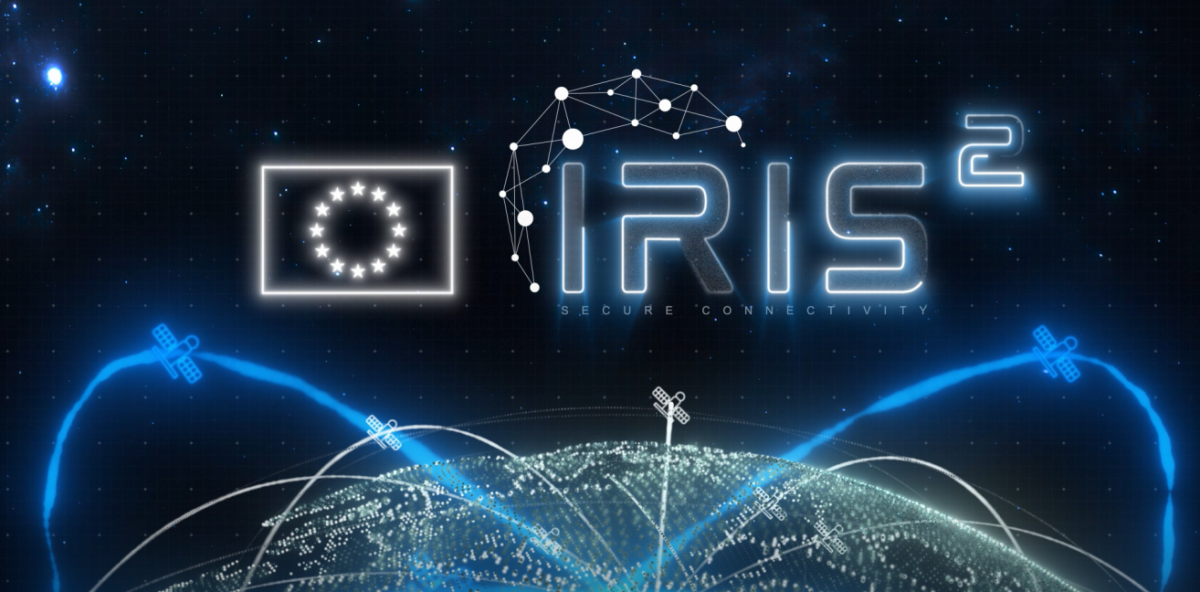
© European Commission – illustrative image