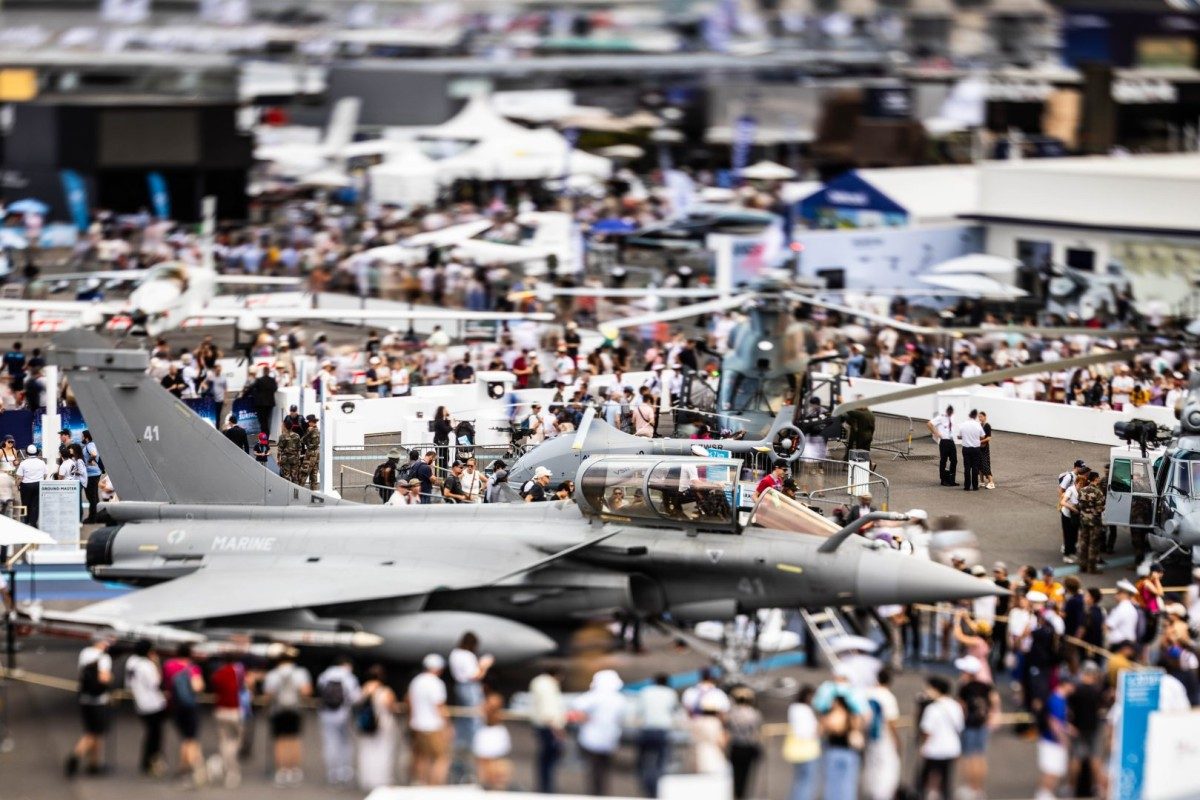
Once again this year, the International Paris Air Show (SIAE) at Le Bourget delivered on its promises.
From June 16 to 22, 2025, the Parisian sky transformed into a global aerospace showcase, bringing together innovations, spectacular demonstrations, and strategic announcements.
On the tarmac, in the halls, and during conferences, one observation became clear: the sector is entering a new era, shaped by the climate emergency, geopolitical tensions, and the rise of digital technology.
For Ametra Group, this new edition was a prime opportunity to gauge the sector’s pulse and confirm our role as a key player in its transformation. This historic edition highlighted an unprecedented commitment to decarbonization, accelerated digitalization, and renewed ambition for Defense, space, and European technological sovereignty.
Major Structuring Trends of the 2025 Edition
Sustainable Aviation: From Promise to Reality
Far from being an abstract concept, decarbonization has entered its industrialization phase. The challenge is no longer just to innovate, but to deploy on a large scale.
- Sustainable Aviation Fuels (SAF): The focus was on securing production and achieving a 10% incorporation target by 2030. For example, Elixir Aircraft is already testing 100% SAF flights.
- Disruptive Technologies: Demonstrators of Open Fan engine architectures, promising a consumption reduction of around 20%, were a major attraction. Simultaneously, major players unveiled their roadmaps for hydrogen, focusing on the critical challenges of cryogenic storage onboard and the adaptation of airport infrastructure.
Digitalization, AI, and Cybersecurity: The Performance Triptych
Digital transformation is now integrated across the entire value chain.
- Digital Twin: This technology has become the standard, not only for aircraft design but especially for predictive maintenance and optimizing in-service operations. Airbus, in particular, presented the evolution of its simulation and predictive modeling tools for its production lines. Safran highlighted its developments for data-driven real-time maintenance.
- AI for Production: Artificial intelligence solutions were presented to optimize supply chains, anticipate bottlenecks, and improve quality control—crucial issues in the face of increasing production rates. Several conferences also emphasized the pressure on Tier 2 and 3 subcontractors to secure this ramp-up, particularly in the fields of precision mechanics, composite materials, and embedded electronic systems.
New Materials and Additive Manufacturing: The Silent Revolution
The quest for lightness and performance relies on innovative materials.
Thermoplastic composites, lighter and recyclable, are gaining ground over thermosets. Additive manufacturing is no longer a gadget: it is used for critical parts such as fuel injectors or structural elements, reducing mass and the number of parts to assemble.
Defense and Sovereignty: A Strong Comeback
The geopolitical context has brought defense issues to the forefront.
The program SCAF (Future Combat Air System) was a centerpiece of Le Bourget, with detailed presentations of the collaboration between Dassault Aviation, Airbus, and their partners. This program is part of an integrated European defense strategy, in line with the ambitions of the European Defence Fund and Franco-German bilateral cooperation.
Drones, from MALE (Medium Altitude, Long Endurance) to connected swarms, as well as space command and control (C2) solutions, affirmed their indispensable role in future operations. The 2025 edition also confirmed the vitality of French defense exports, with new prospects around the Rafale and strengthened industrial cooperation, particularly in India and Southeast Asia.
The 2025 Paris Air Show was also marked by the signing of a public support agreement for VORTEX, the space glider demonstrator developed by Dassault Aviation. This ambitious project, supported by the French state, aims to explore suborbital flight and controlled atmospheric re-entry technologies, with a focus on reusability. With the goal of placing small payloads into low Earth orbit, VORTEX stands at the crossroads of aeronautics and space. It symbolizes France’s desire to gain technological sovereignty in segments currently dominated by major American New Space players, and could foreshadow future reusable and agile European space transport systems.
Furthermore, the show was also an opportunity to reiterate European space ambitions through structuring programs such as IRIS² (Infrastructure for Resilience, Interconnectivity and Security by Satellite), Galileo (navigation) and Copernicus (Earth observation). These projects embody a growing desire for technological sovereignty and secure communications in low Earth orbit. This edition also highlighted the dynamic of European collaborative research, with demonstrators funded under the Clean Aviation program or the European Defence Fund.
The Rise of eVTOLs and Urban Air Mobility
The “flying taxi” sector has matured.
Beyond flight demonstrators, discussions focused on the major challenges of certification by EASA and the FAA, and secure integration into an already dense airspace.
Players like Archer and EHang unveiled prototypes ready for service, with initial AI integrations to assist pilots.
The industrialization of production remains a major challenge, where expertise in process engineering is paramount. The show also highlighted a thriving ecosystem of technology startups, from alternative propulsion systems to software simulation solutions.
Exceptional Commercial Momentum
The 2025 edition was an exceptional vintage in terms of contracts, a sign of airlines’ confidence and the need to renew fleets.
- Airbus, the big winner: The European giant once again dominated the show with firm orders and purchase intentions for several hundred aircraft, mainly for its A320neo family and its long-haul A350.
- Engine manufacturers in force: Following Airbus, engine manufacturers like MTU Aero Engines and Safran announced long-term engine and service contracts, driven by demand for new-generation engines (LEAP, GTF).
- Boeing in a phase of reconquest: The American aircraft manufacturer focused its communication on the quality, safety, and rigor of its industrial processes, while also lifting the veil on its upcoming structuring projects.
People at the Heart of the Industry
Le Bourget is not just about contracts; it’s also where the future of professions is shaped.
- The Aircraft of Professions: Faced with recruitment challenges linked to increasing production rates, this area saw record attendance. It highlighted the diversity of careers, from embedded systems engineers to composite materials technicians.
- The Public Days: Aerial demonstrations, as always, captivated the public. The aerial ballet of the Rafale, the capabilities of the A400M, the A350-1000, and the dynamic presentations of the Guépard helicopters attracted numerous visitors.
The A400M Atlas, a European military transport aircraft developed by Airbus Defence and Space, once again particularly impressed during its flight demonstrations. Capable of tactical and strategic operations, in-flight refueling, and deployments on austere terrains, it embodies modern operational versatility. The show highlighted its recently improved capabilities in simultaneous heavy load drops, short runway landings, and autonomous navigation in degraded environments.
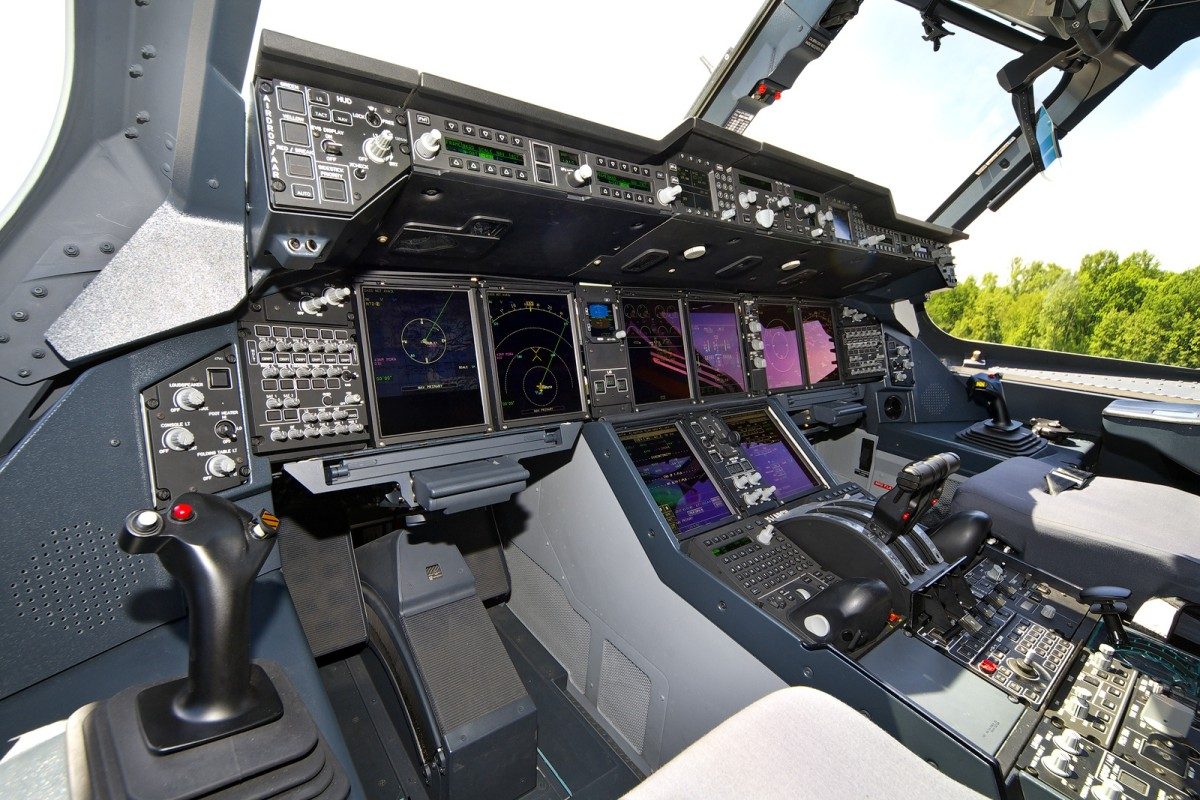
A400M Cockpit © Oleg Belyakov
A Moment of Shared Pride for Ametra Integration Teams
On Saturday, about forty Ametra Integration employees, accompanied by their families, traveled to the show at the joint initiative of the Works Council and management. Departing by bus in the morning, they were able to discover the various stands and attend the flight demonstrations, particularly that of the Rafale: a significant moment for the teams, who contribute directly to this program of excellence.
Ametra Integration indeed participates in the manufacture of five Rafale subsystems for five distinct clients: Dassault Aviation, Thales, Safran, MBDA, and Aresia. Seeing this aircraft, on which they work every day, in action was a great opportunity to measure the concrete impact of their expertise.
This type of initiative is fully in line with the group’s desire to strengthen the link between projects carried out in the field, the values of knowledge transfer, and the recognition of work accomplished.
In conclusion: A Committed Industry, Stimulating Challenges
The 2025 Paris Air Show concludes with a clear vision: the aerospace industry has fully embraced the dual requirement of growth and environmental responsibility. Transformation is no longer an option, but an industrial reality in motion.
As a recognized player in industrial subcontracting, Ametra naturally participated in the Le Bourget show and is involved throughout the life cycle of embedded and mechatronic systems, from the study phase to production.
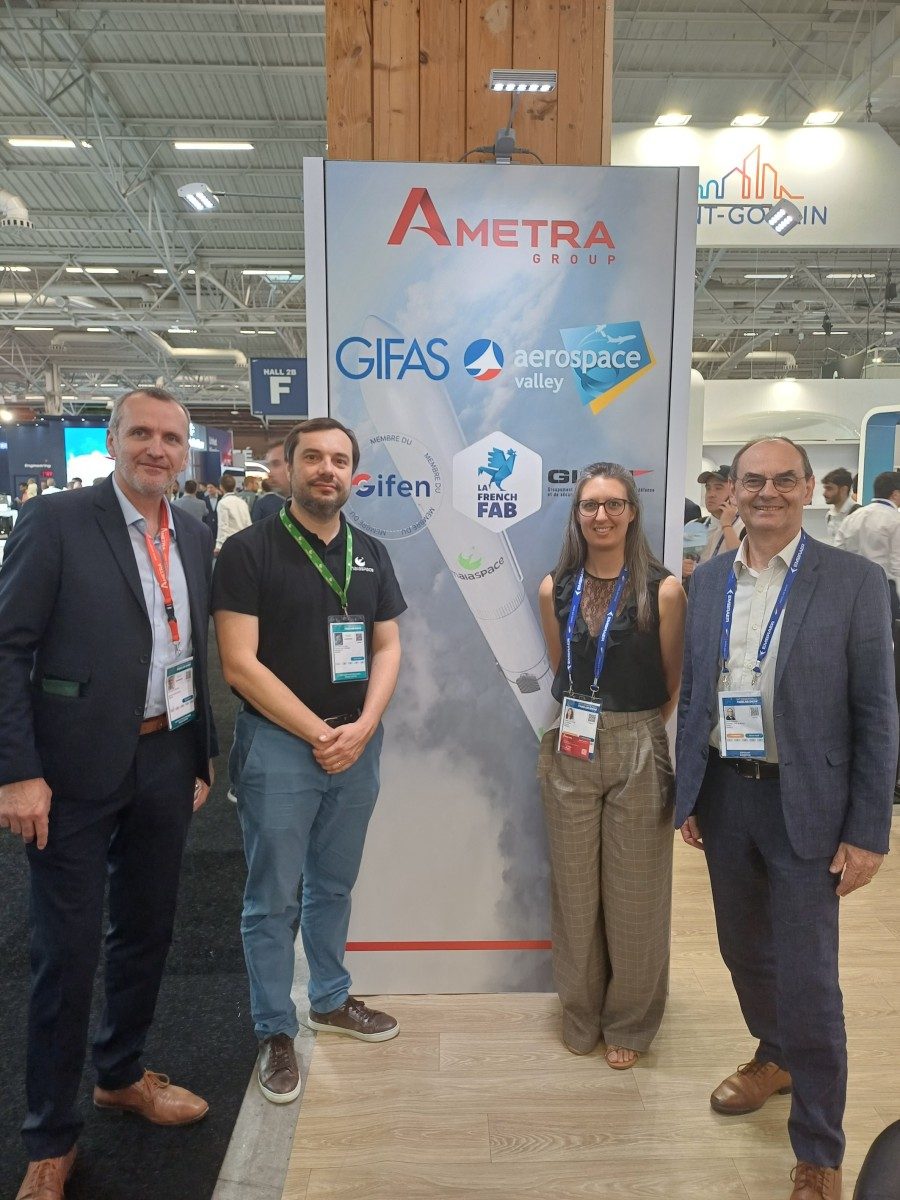
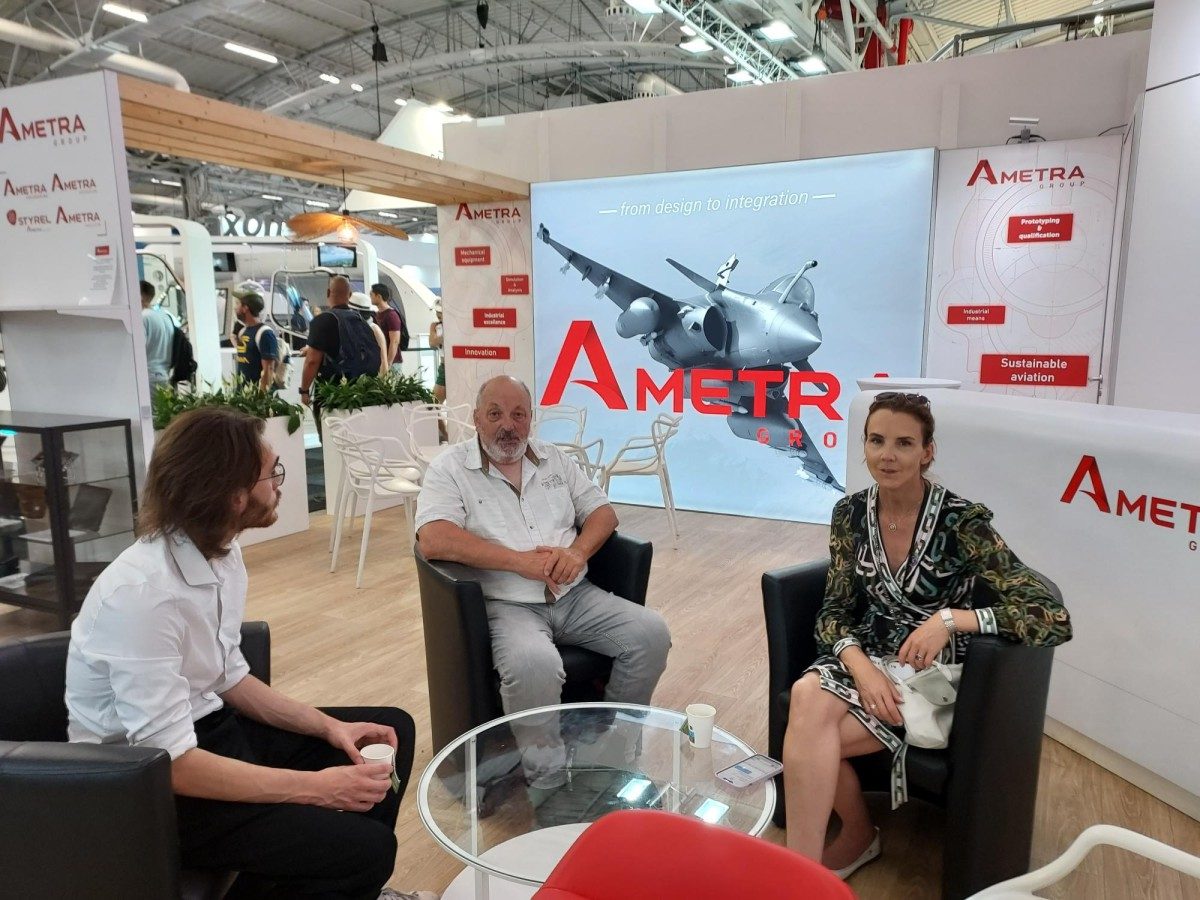
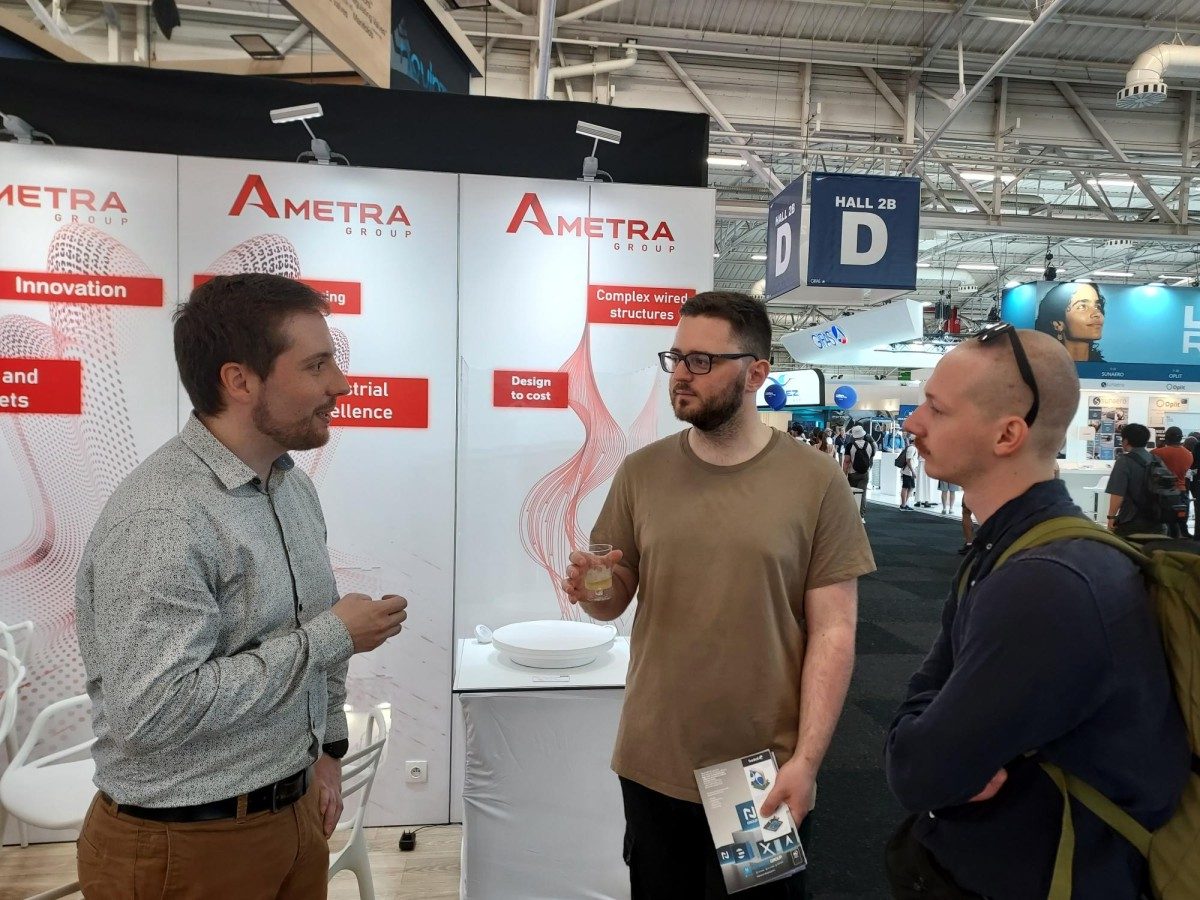
Building on our expertise, we are committed alongside our partners to meet the challenges of structural lightening, complex system integration, qualification of new processes, and ramp-up.
See you in 2027!
To learn more about our expertise and references, visit our official website now. We are also on LinkedIn.
© SIAE – main image