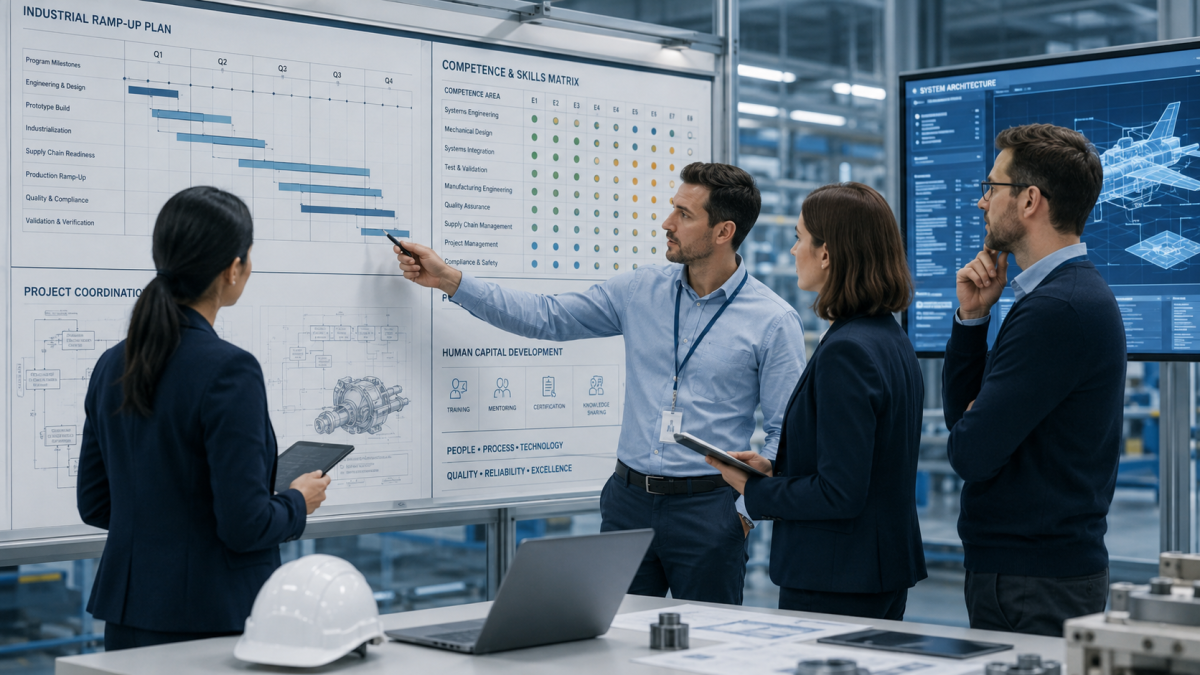
European rearmament, the revival of nuclear power and the ramp-up of entire sectors — from aeronautics to land defence — have shifted the centre of gravity of the industrial debate. Yesterday, the question was: do we know how to design and manufacture?Today, it has become: do we know how to produce quickly, at scale, with the right skills and at the right price? The ramp-up experienced by major prime contractors is not just a production-chain challenge. It is first and foremost a human challenge. The bottleneck is no longer the machine; it is skills In the precision trades in which Ametra operates — mechanical, electrical and electronic engineering, systems integration — scarcity is no longer only about profiles, but about the time required to make them operational. A designer, a stress engineer or a systems architect cannot be “plugged” into a defence or nuclear project overnight. A regulatory environment, a quality framework and a results-driven culture must be passed on. That is why training stops being a cost line and becomes a strategic lever of sovereignty. Training quickly and well means securing a ramp-up; training poorly means importing risk into programmes where mistakes cannot be recovered. Why one-off training is no longer enough Industry long operated on a “one shot” basis: a two-day session, a skill ticked off, and then on to something else. That reflex no longer holds up in the face of architectures that are increasingly software-driven, connected and demanding. Skills are built over time, through learning pathways, with milestones and a continuous improvement logic, as explained in AMETRA’s article on the value of a training pathway rather than one-off training. However, a structured pathway immediately raises another requirement: traceability. Who was trained, in what, by which qualified trainer, and with what result? In an audited environment — defence, nuclear, aeronautics or rail — this evidence is not an administrative convenience. It is a condition for access to markets. Qualiopi: training quality becomes an enforceable standard That is precisely what the Qualiopi approach is about, which has become the quality benchmark in France, governed by the reading guide to the national quality framework, and which conditions public funding for training actions. Behind its 32 indicators lies a simple and demanding idea: quality training must be managed as a process, with defined objectives, feedback collected, corrective actions tracked and evidence available at any time. For training organisations — whether internal academies, such as the Ametra Group’s, or specialised providers — the difficulty is not understanding the framework, but maintaining it day to day without compliance living “separately” from operations. Too often, evidence sits dormant in computer folders and spreadsheets, and the audit turns into several weeks of reconstruction. This is where a new generation of tools is changing the game. Platforms such as Certeef, the Qualiopi management and compliance software designed for training organisations, connect sales, training delivery, administration and quality in a single flow: each session automatically feeds the audit evidence, with no re-entry. Compliance stops being an end-of-cycle sprint and becomes a permanent state — a logic that industrial players accustomed to innovation management systems, as described by ISO 56002, will recognise immediately. Continuity with the industrial culture of evidence Ultimately, what is at stake in training echoes what is at stake in high-precision engineering: value lies not only in an engineer’s gesture or knowledge, but in the ability to document, trace and capitalise. The same rigour that structures a product qualification file must structure a skills ramp-up pathway. At a time when industrial sovereignty is also measured by the speed at which a sector can rebuild its human capital, certified training quality is not a peripheral issue. It is one of its most discreet — and most decisive — links. To learn more about Ametra Group’s expertise and our references, visit our official website. We are also on LinkedIn!
European air defence put to the test by multi-domain threats
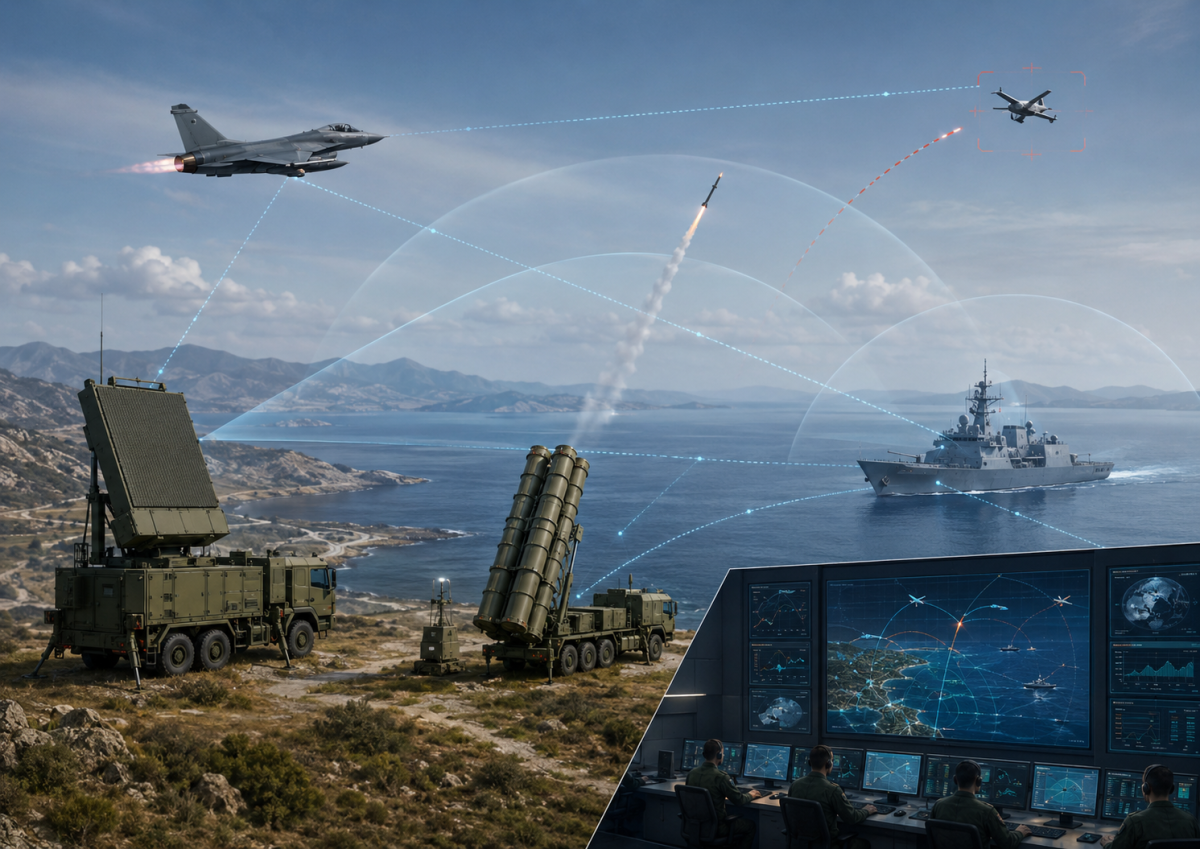
Low-cost drones, cruise missiles, ballistic vectors, hypersonic threats, jamming and cyberattacks: air defence can no longer be reduced to a duel between radar and missile. It is played out on the ground, in the air, from the sea, but also across command networks, test capabilities and the industrial capacity to produce, qualify and sustain complex systems. A ground–air–sea continuum to integrate NATO now describes integrated air and missile defence as a capability covering the full spectrum of aerial threats, from drones to ballistic and hypersonic missiles. This shift calls for a distributed architecture: fixed and mobile radars, optronic sensors, air-defence frigates, fighter aircraft, short-, medium- and long-range ground-to-air systems, electronic warfare assets and interoperable C2 centres. (NATO) The challenge, therefore, is not only to have high-performance sensors or effectors. It is about fusing heterogeneous data, prioritising threats, avoiding redundant shots, preserving communications and maintaining controlled decision-making within a very short timeframe. At European level, initiatives such as the European Air Shield and the European Drone Defence Initiative, set out in the European defence roadmap to 2030, reflect this search for a coordinated response. The naval dimension plays a structuring role: a surface combatant can extend the detection bubble, protect a coastal area and share its tracks with land and air assets. (Defence Industry and Space) Saturation changes the industrial equation Recent conflicts have confirmed a key point: a credible defence must be able to absorb saturation. A low-cost drone can force the use of a far more expensive interceptor; a salvo may seek to exhaust stocks; a combined attack can mix decoys, jamming and multiple trajectories. For industry, the challenge becomes twofold: increase performance, but also reduce unit cost, simplify maintenance and accelerate production. This directly brings up ramp-up, supply chain and obsolescence issues. Electronic sub-assemblies, computers, FPGA boards, power supplies, antennas, actuators, data links and test benches must be secured over time. Qualification chains must also keep pace: environmental testing, EMC, software validation, embedded cybersecurity, component qualification and technical documentation usable for in-service support (MCO). This industrial robustness determines real availability: a high-performance system that is difficult to maintain, test or supply weakens the entire posture. Innovative solutions, but qualified The expected innovation is not limited to interceptors. It also concerns multifunction radars, data fusion, decision-support AI, open architectures, directed-energy effectors, counter-drone solutions, digital twins and simulation capabilities. The objective is clear: detect earlier, decide faster, engage at the right cost and reconfigure systems in the face of evolving threats. It is precisely on these engineering building blocks that Ametra and its partners can contribute: mechanical and electronic design, equipment industrialisation, software development, cybersecurity, test benches, system validation, documentation, configuration management and life-cycle support. Recent posts on the Ametra blog about future defence programmes also remind us that meaningful autonomy depends less on an isolated object than on coherence between sensors, payloads, links, command and support. (Ametra Group) Conclusion: building technological endurance For Europe, air defence has become an issue of industrial sovereignty as much as security. The answer will not come from a single system, but from a coherent, interoperable and sustainable set, capable of operating from the ground, the air and the sea. In this context, the value of engineering lies in execution: turning innovation into qualified capabilities, produced at a controlled rate and sustained over time. To learn more about Ametra Group’s expertise and our references, visit our official website. We are also on LinkedIn!
Industrial Ramp-up and Artificial Intelligence: What Le Bourget 2025 Revealed
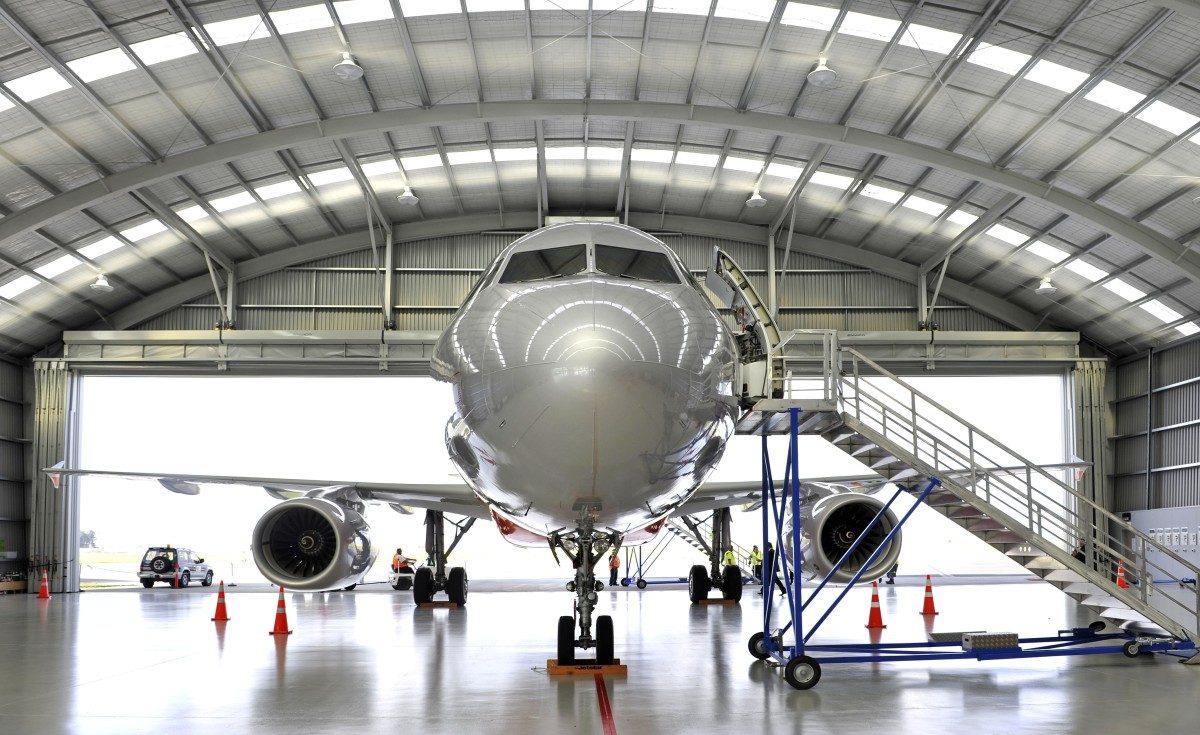
During the Le Bourget 2025 Air Show, Ametra hosted a special Smart Industries broadcast on its stand, dedicated to a crucial issue for the entire aerospace industry: industrial ramp-up. With record order books (Airbus has a global order book of approximately 10,000 aircraft), the question is no longer just about producing, but about producing better, faster, and sustainably. How can this challenge be met in a context of raw material tensions, repayment of state-guaranteed loans contracted during the health crisis, and skills shortages? To discuss this, three speakers shared their perspectives: An Industry Under Pressure, Yet Mobilized From the opening of the debate, Clémentine Gallet highlighted the scale of the task: “ Airbus has almost 10,000 aircraft on order. (…) We are all under intense pressure to deliver faster and achieve this ramp-up quite quickly ” This requirement comes amidst a rapid post-crisis recovery, marked by a loss of skills and a contraction of industrial capacities. The sector must now contend with a triple challenge: rebuilding expertise, absorbing demand, and securing funding. Vincent Charlet emphasized this combination of constraints: “Aerospace has the particular characteristic of being an eminently dual sector. (…) The growing needs on the defense side have been strongly expressed over the past three years.” Combining Ramp-up and Excellence: The AMETRA Group Example Anne-Charlotte Fredenucci shared Ametra’s experience, emblematic of the challenges faced by many Tier 1 and 2 manufacturers: “Coming out of Covid, we are asked to be even better, even more on time, even higher in quality. (…) We implemented a transformation program that we called NEO – New Operational Efficiency. This translates into visual management in our factories, greater punctuality, and higher quality for our clients.” Ametra has also invested in cybersecurity, achieving bronze certification, and strengthened the security of its sites and IT networks. These are all prerequisites for remaining a reliable player in an environment where demands are increasing at every level. Artificial Intelligence as a Lever At Le Bourget 2025, another keyword emerged: AI. Artificial intelligence is no longer a distant prospect but a tool that is already transforming engineering professions. “We partnered with the ECE engineering school and its AI Lab, because we must train our engineers in the impacts of AI on our design office professions” (Anne-Charlotte Fredenucci) The objective of this partnership is to help engineers concretely understand how AI transforms client expectations and engineering methods, from design to system validation. In parallel, Ametra created its internal research laboratory, Ametra Research, which brings together doctors working on future-oriented topics such as metamaterials. This work opens the way for new applications in the design and performance of embedded systems. The uses of AI also extend to concrete applications within Ametra’s teams: automated extraction of technical data, vision-assisted dimensional control, and electronic design assistance. For Ametra, AI is both a driver of performance and an asset for attracting new generations of engineers. Employment and Skills: The Key to Ramp-up The other major part of the debate focused on employment and the attractiveness of professions. Didier Katzenmayer, President of UIMM Occitanie, highlighted the scale of the needs: “We need talent across the entire spectrum: from trained blue-collar workers with CAP to Bachelor degrees, up to engineers and doctors. (…) Occitanie is the leading aerospace region in France, and the skills needs there are considerable.” At Ametra, this translates into concrete actions: “It’s not enough to have a female President,” emphasized Anne-Charlotte Fredenucci. “I invite young girls and women to come and discover our professions: aerospace is an industry that inspires dreams.” An Organized and Resilient Industry Beyond the specific challenges of each company, the debate highlighted a collective asset: the organizational capacity of the French aerospace industry. “The aerospace industry is organized in an exemplary manner,” observes Vincent Charlet. “Despite differences in interests between clients and suppliers, a shared concern transcends each actor: considering the future of the industry as a whole.” Business clubs, professional unions, performance improvement programs such as Aero Excellence: this structure strengthens the competitiveness and resilience of the sector, by pooling efforts in the face of successive crises. Through GIFAS, the French industry is also part of a broader European dynamic, aiming to strengthen the industrial sovereignty and export competitiveness of aerospace. Conclusion: A Collective and Technological Challenge The Smart Industries broadcast at Le Bourget 2025 clearly showed: ramp-up is not just a constraint; it is also an opportunity for transformation. It calls for combining: For Ametra, this triple challenge is an opportunity: to reaffirm its role as an integrator and industrial partner at the heart of an industry that innovates and transforms, and towards a competitive, sustainable, and human aerospace industry. Discover our official website now. We are also on LinkedIn! (c) main image: Jetstar Airways (jetstar.com), CC BY-SA 2.0 via Wikimedia Commons
Interns who continue their journey at Ametra
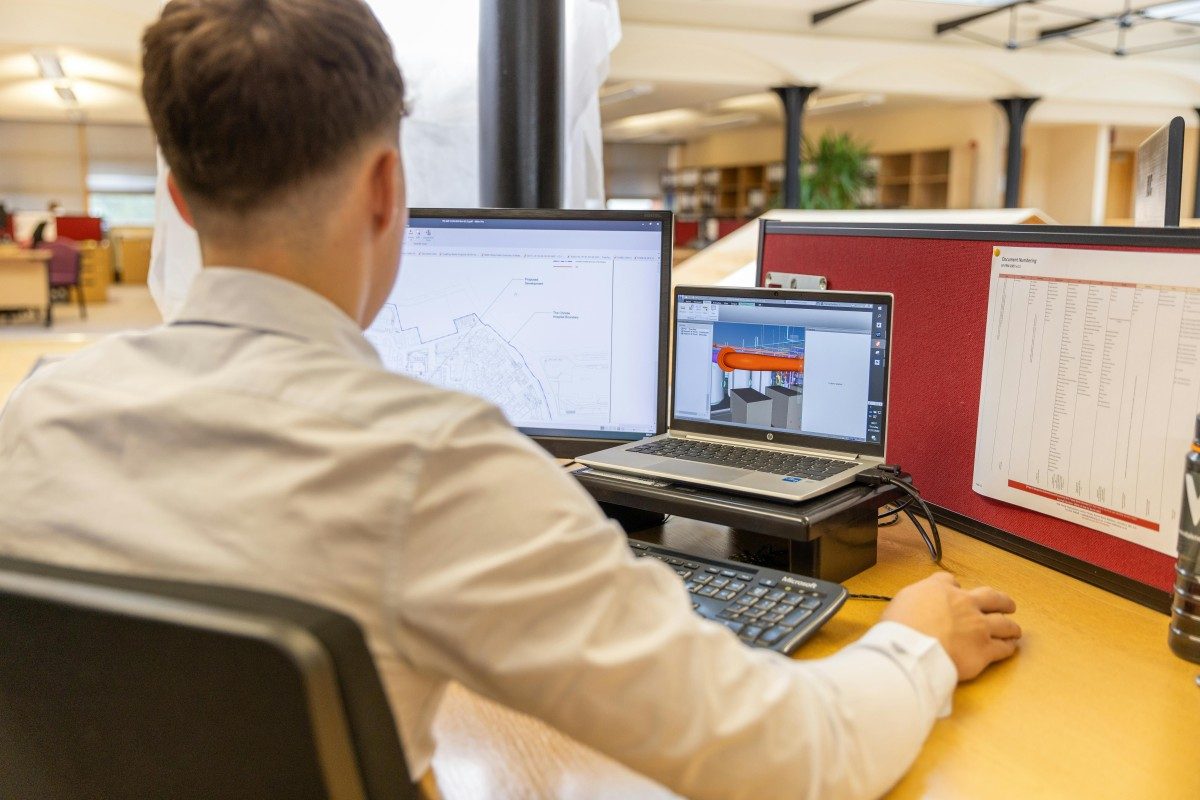
Each year, Ametra welcomes final-year students for a six-month internship. These assignments give them the opportunity to contribute to tangible industrial projects and to follow them from start to finish, while preparing for the next step in their professional career. Internships grounded in real-world experience At Ametra, an internship is never a superficial immersion. Students are integrated into project teams, work on real technical topics, and see their contributions progress through to the final presentation. This approach enables them to face real-world requirements and quickly develop their autonomy. As Victor Guermonprez, a former intern who became a project engineer within the Systems Integration BU, sums it up: “What stood out to me was the diversity of projects and the spirit of mutual support. I had the opportunity to work on embedded systems in aerospace and defense, with new challenges every week. The team gave me the confidence I needed to develop my skills quickly.” Strong continuity between internship and employment Most final-year interns choose to stay after their internship, on a permanent contract or through a work-study program depending on their path. This retention is based on several levers: the quality of the topics offered, the close support from mentors and the collective spirit that characterizes our teams. In 2025, several young talents will therefore join Ametra on a permanent basis. Their decision reflects the attractiveness of our technical environments, as well as the strength of our corporate culture, where teamwork and human support play a key role. At present, 100% of our final-year interns have accepted to continue with us on a permanent contract! Towards a stronger relationship with engineering schools At the start of the academic year, Ametra aims to go further by strengthening its ties with engineering schools. Forums, round tables, and on-campus talks will help drive this momentum. The objective: to increase opportunities to meet students and to highlight our ambassadors (former interns now in position) who provide concrete testimony of their journey and their projects. Investing in passion and support Beyond recruitment figures, what stands out from interns’ testimonials is their passion for engineering and the pleasure of working in an environment where mutual support and knowledge sharing come naturally. For Ametra, welcoming an intern is not only about training a future employee, but about creating the conditions for a lasting relationship, built on trust and a sense of purpose. Would you like to learn more about opportunities within the Ametra Group? Visit our official website now. We are also on LinkedIn!
WNE 2025 as if you were there: a concrete revival, still taking shape
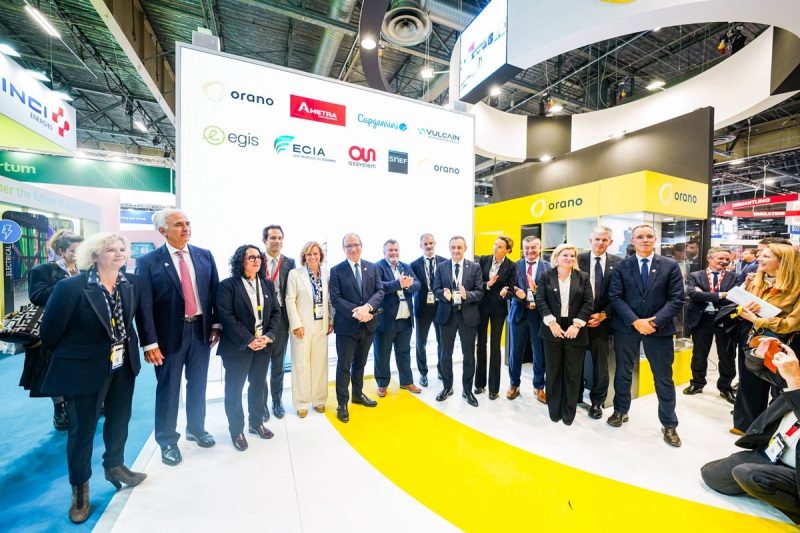
From November 4 to 6, 2025, the 6th edition of the World Nuclear Exhibition brought together at the Paris Nord Villepinte exhibition center more than 1,000 exhibitors from 80 countries and nearly 25,000 professional visitors: a historic record for the world’s largest civil nuclear trade show. An edition focused on practical outcomes: fewer concepts, more feedback and solutions ready to be deployed. An industry ramping up This edition marked a turning point: research and development gave way to a focus on industrialization, securing supply chains and energy sovereignty. The industry has entered a phase of strengthened production momentum, even if the full ramp-up is still underway. In the aisles, the tone was quickly set: industrialize, produce, and make reliable.The major players (EDF, Framatome, Orano, CEA and Onet Technologies) showed rare unity around the theme Nuclear Today and Tomorrow. The opening conferences also reiterated the priorities: standardize processes, secure supply chains, and guarantee energy sovereignty. For Ametra Group, involved in several strategic programs, this momentum confirms the key role of integrated engineering in the industrial success of the French nuclear sector. Pragmatic, integrated innovation Innovation, far from spectacular demonstrations, was expressed through practical applications that can be implemented immediately. Framatome presented demonstrations of artificial intelligence applied to maintenance and quality control. CETIM, Onet Technologies and Veolia Nuclear Solutions, for their part, highlighted robotics, additive manufacturing and the digitalization of maintenance—tools that are now central to improving the reliability of facilities. This pragmatic approach echoes the practices of Ametra Engineering and Ametra Simulation, where performance and reliability guide every project. Industrial sovereignty and reshoring Strengthening the supply chain was at the heart of discussions. Orano announced several engineering partnerships as part of its program Aval du Futur (Ametra is one of these partners), dedicated to modernizing the fuel cycle, as well as an agreement with Sintermat to develop new advanced materials for nuclear packaging. These initiatives reflect a shared ambition: bring production closer to needs and reshore strategic know-how. Ametra Group is fully aligned with this momentum through the design and integration of handling, testing and assembly equipment at the heart of programs such as Aval du Futur. Beyond Electricity: diversification in the making A major new feature of this edition, the Beyond Electricity Expo (BEE) showcased more than twenty projects exploring non-electric uses of nuclear energy: low-carbon hydrogen, industrial heat, desalination, radiomedicine, and even space propulsion. This diversification confirms the cross-cutting role of nuclear energy as a lever for the energy transition, even if these applications remain, for now, at pilot or experimental stages. SMRs and major technical projects Small modular reactors (SMRs), EPR2 and major life-extension programs took center stage in technical discussions. The digitalization of facilities, through digital twins and predictive maintenance, is gradually becoming the norm—evidence of a more mature sector and a ramp-up that is now clearly tangible. Skills, training and attractiveness The sector anticipates a massive need for talent: by 2035, nearly 100,000 hires are expected according to GIFEN. The Job & Training area drew strong attendance: schools, training organizations and industrial players mobilized to restore visibility and attractiveness to nuclear careers. A priority that aligns with Ametra Group’s commitment to passing on know-how and building the skills needed to support the industrial revival. An open, structured sector in an international framework The WNE 2025 confirmed that the nuclear revival extends well beyond France. Discussions with South Korea, the United Arab Emirates and the Czech Republic illustrated the growing strength of industrial and technological cooperation. The IAEA /IAEA and several European consortia reaffirmed their role in international standardization and safety—essential conditions for the success of export ambitions. At the same time, governance, regulatory simplification and sustainable financing (European taxonomy and green bonds) are evolving to support this new industrial pace. Conclusion: a barometer more than a showcase The WNE 2025 stands out as a reliable barometer of a sector undergoing rapid structuring, rather than a showcase of completed successes. The French and European nuclear sector has regained coherence, visibility and confidence, but challenges remain: industrial scale-up, skills management, supply-chain security and diversification of uses. In this context, Ametra Group continues its commitment to making nuclear a safe, sustainable and well-controlled sector, backed by several decades of expertise serving industry. To learn more about the activities, expertise and news of Ametra Group, visit ametragroup.com. You can also follow us on LinkedIn to discover projects, feedback and industry news. (c) main image: Orano