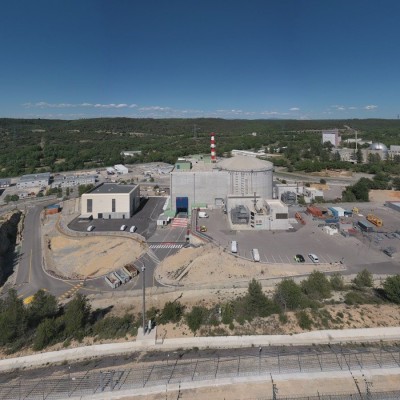
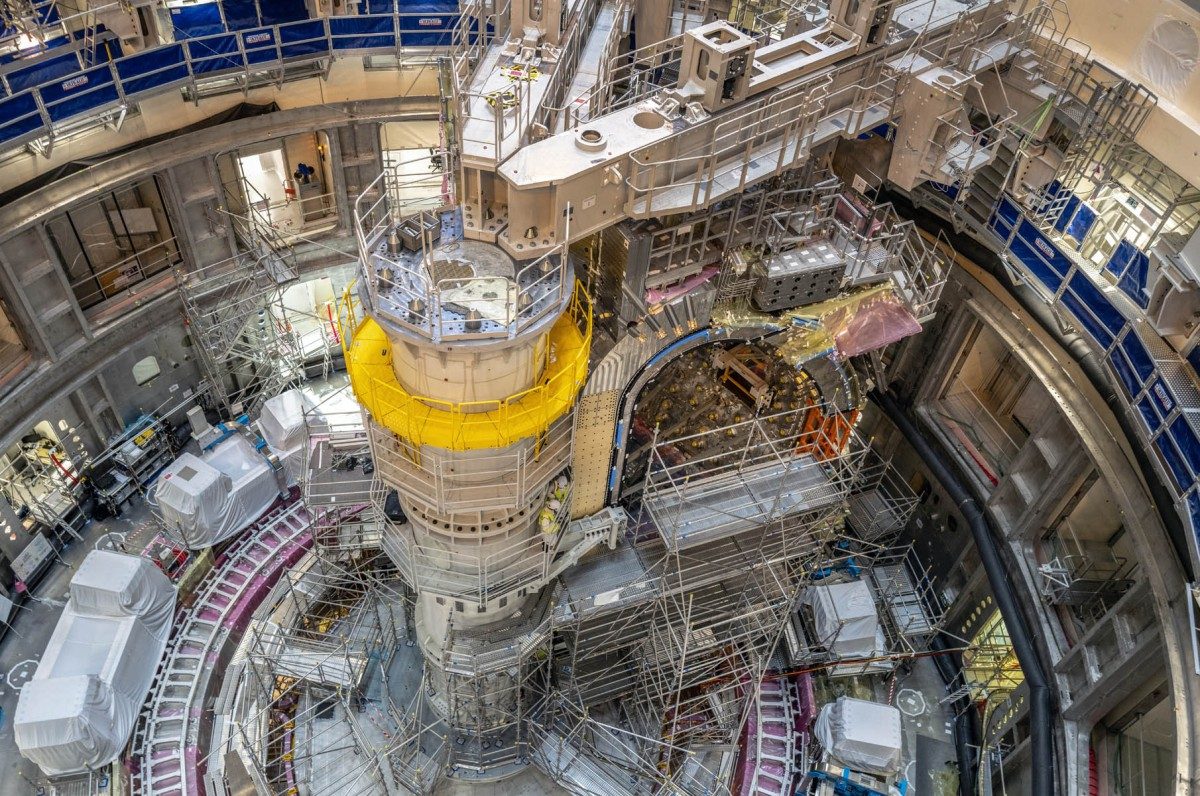
ITER is the world’s largest project dedicated to nuclear fusion, a clean and virtually inexhaustible energy source. Located in Cadarache, in the Southeast of France, it brings together 35 countries and mobilizes thousands of scientists and engineers around an unprecedented goal: demonstrating the feasibility of fusion as an energy source.
The advances of 2025 mark a new stage in the construction of the immense experimental tokamak and confirm the momentum of this extraordinary project.
Technical Milestones Already Achieved and 2025 Stages
Among the significant milestones already reached is the insertion of the first vacuum vessel sector, carried out with millimeter precision in the spring of 2022. This monumental enclosure, composed of nine sectors weighing several hundred tons each, is the heart where the plasma will take shape.
In 2025, a symbolic milestone is reached with the completion of the central solenoid, a superconducting magnet weighing nearly 1,000 tons and standing 18 meters high, capable of generating a magnetic field of 13 teslas. This solenoid will play an essential role in the confinement and stabilization of the plasma.
These advances are part of a revised schedule: the first plasma is now expected by 2034, followed by the deuterium-tritium phase around 2039–2040.
In February 2025, the CEA’s WEST tokamak broke a world record by maintaining a plasma for more than 22 minutes. This feat far exceeds previous performances and demonstrates progress in mastering plasmas over long durations. Already in 2024, WEST had established a record of 6 minutes in high-performance mode, which validated ITER’s technological choices, particularly the use of tungsten walls.
Beyond these technical milestones, ITER remains a colossal project: its total cost is now estimated between 20 and 25 billion euros (compared to 10 billion at its launch). The European Union finances approximately 45% of the project, with other partners sharing the remainder (United States, China, India, Japan, South Korea, Russia). This distribution reflects the strategic and geopolitical dimension of the international cooperation surrounding ITER.
Heating the Plasma: Three Complementary Methods
To initiate fusion, the plasma must be heated to approximately 150 million degrees Celsius, which is nearly ten times the temperature at the core of the Sun.
To reach this extreme temperature, three heating methods are combined:
- Neutral Beam Injection (NBI): a beam of neutral atoms is accelerated and then injected into the plasma. Transformed into charged particles, they transfer their energy through collisions.
- Ion Cyclotron Resonance Heating (ICRH): very high-frequency radio waves directly excite the ions.
- Electron Cyclotron Resonance Heating (ECRH): microwaves interact with the electrons, which then redistribute their energy.
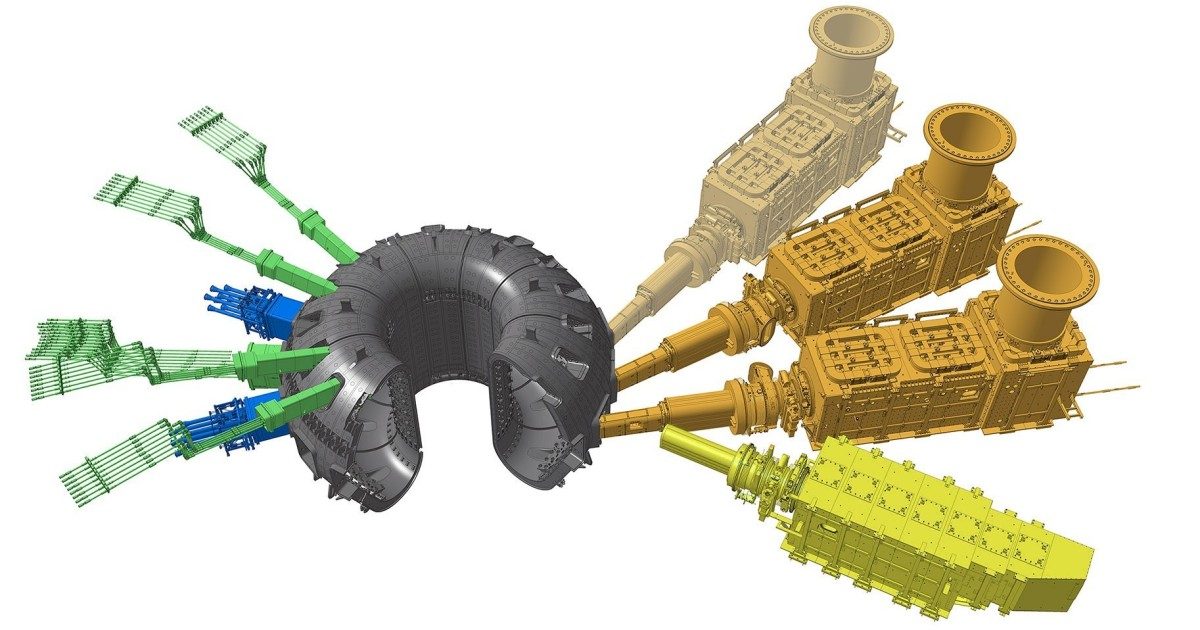
© ITER “The ITER tokamak will combine three external heating sources to bring the plasma to the temperature required for fusion: neutral beam injection (right) and two sources of high-frequency electromagnetic waves—ion and electron cyclotron heating (left, in blue and green).”
These cutting-edge technologies are essential for initiating and maintaining the fusion reaction.
Ametra’s Commitment to ITER
For more than twelve years, Ametra has put its expertise in mechanical engineering and complex systems at the service of the project. In 2025, our teams are mobilized on several critical fronts:
- Plasma Heating Antennas
Our employees are working on two of the three main antennas, which are essential for reaching the necessary 150 million degrees:
- The Electron Cyclotron (ECRH) antenna, based on the interaction between microwaves and electrons,
- The Neutral Beam antenna, which injects neutral atom beams at very high energy. Our engineers design the associated mechanical components. For the Neutral Beam antenna, for example, Ametra participates in the development of the “duct liner,” from drafting specifications to supplier visits.
“We are entering a new phase: after several years of studies, we are moving to concrete implementation. This is a key stage of the V-cycle, and collaboration with foreign manufacturers is proceeding very smoothly.” Florian Luiggi, Agency Manager within the Ametra Group
- Claim Management
One of Ametra’s experts is integrated into the ITER platform to support the contractual and technical management of complex files. This activity is essential for securing the project and streamlining coordination between stakeholders.
“Claim management is not a mission we frequently perform, but here, it is indispensable. It allows us to frame the project and ensure technical and financial consistency between the various participants in an international environment.”
- Welding with Westinghouse Electric Company
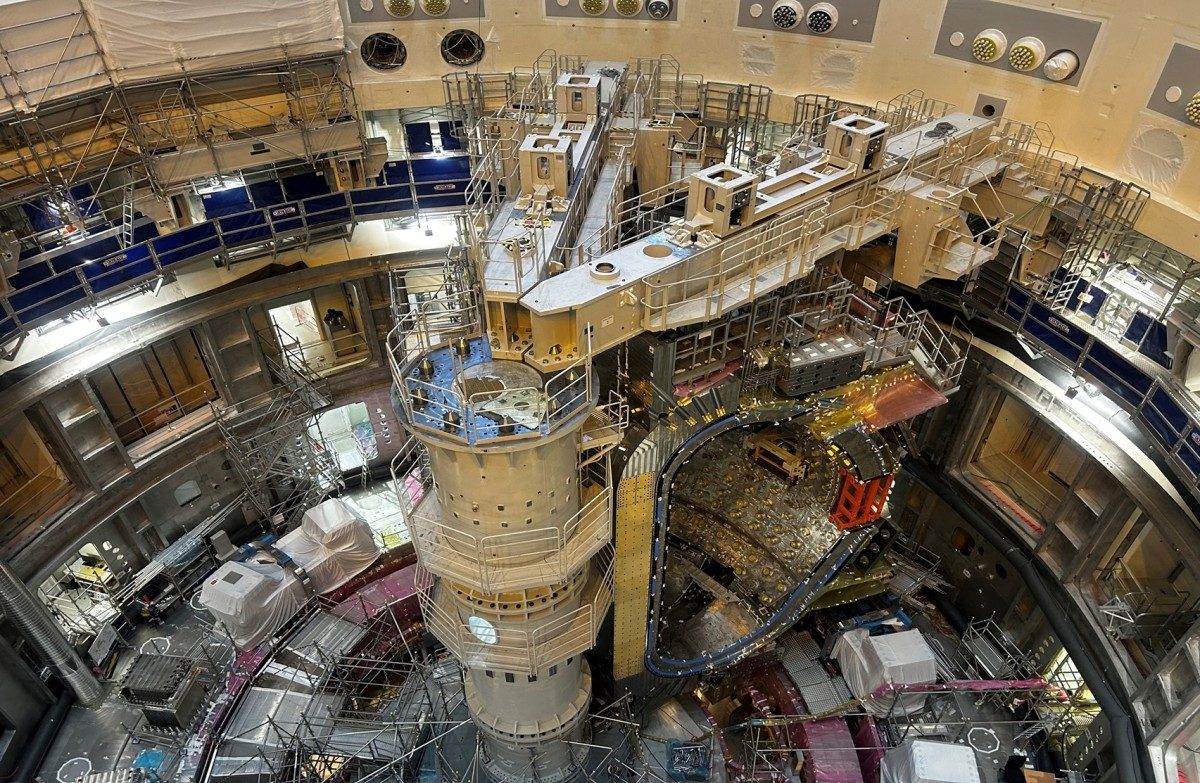
The nine sectors of the vacuum vessel must be welded with extreme precision. Alongside Westinghouse, which is in charge of welding the vacuum enclosure, Ametra designs the mechanically welded and mechanically bolted structures used to introduce and position the welding robots, while ensuring operator safety.
© ITER
Designing structures capable of guiding robots in such a constrained space is an exciting challenge. It requires precision and a very rigorous engineering approach.
- Irradiated Waste Management with CNIM/REEL
We also contributed to the study of the CPRHS, a rail-based handling system that allows a shielded container to collect irradiated components and then transfer them to the hot cell for reprocessing.
A Shared Global Ambition
ITER is not just a scientific project: it symbolizes unprecedented international cooperation. The 35 countries involved include the 27 members of the European Union (via Euratom), the United Kingdom, and Switzerland, as well as China, India, Japan, South Korea, Russia, and the United States.
For Ametra, this international dimension is a prime field of expression. Our teams mobilize their expertise on critical systems requiring precision, innovation, and rigor within a global collaborative environment.
Our previous experience on the Tore Supra tokamak also provides a valuable foundation for addressing ITER’s challenges, particularly regarding heating systems and thermal constraint management.
Each milestone reached brings the scientific and industrial community closer to the ultimate goal: producing ten times more energy than was injected to initiate the fusion reaction (Q ≥ 10). A prospect that, in the long term, could permanently transform the global energy supply.
Would you like to learn more about the Ametra Group’s expertise ? Visit our official website now. We are also on LinkedIn!
© ITER – main image: